Plan a first patch merchandise drop by deciding what the customer will receive, choosing the designs that belong in the launch, and listing the exact specifications and quantities you intend to order. A design count alone is not an order plan: one illustration can become several sizes or backings, while a retail set can combine patches already counted in your stock.
There is no universal best number of designs for a first drop. Start with a range you can describe, approve, photograph, pack and fulfil clearly. Give each additional design or variant a reason to be there, then record the work and quantity it adds.
Define what you are selling before choosing more designs
A patch sold on its own is a different deliverable from a patch already attached to a garment. Decide which of these routes the launch will offer:
- Individual patches: customers receive separate patches and need to understand the backing and intended application.
- Patch sets: customers receive a defined combination, such as one Star patch and one Wave patch, packed and identified as a set.
- Decorated garments or accessories: customers receive the finished shirt, jacket or bag, with the patch already attached.
You can offer more than one route, but each needs its own scope. A patch order does not automatically include sourcing blank garments, attaching the patches, sorting clothing sizes, producing retail cards or shipping individual customer orders.
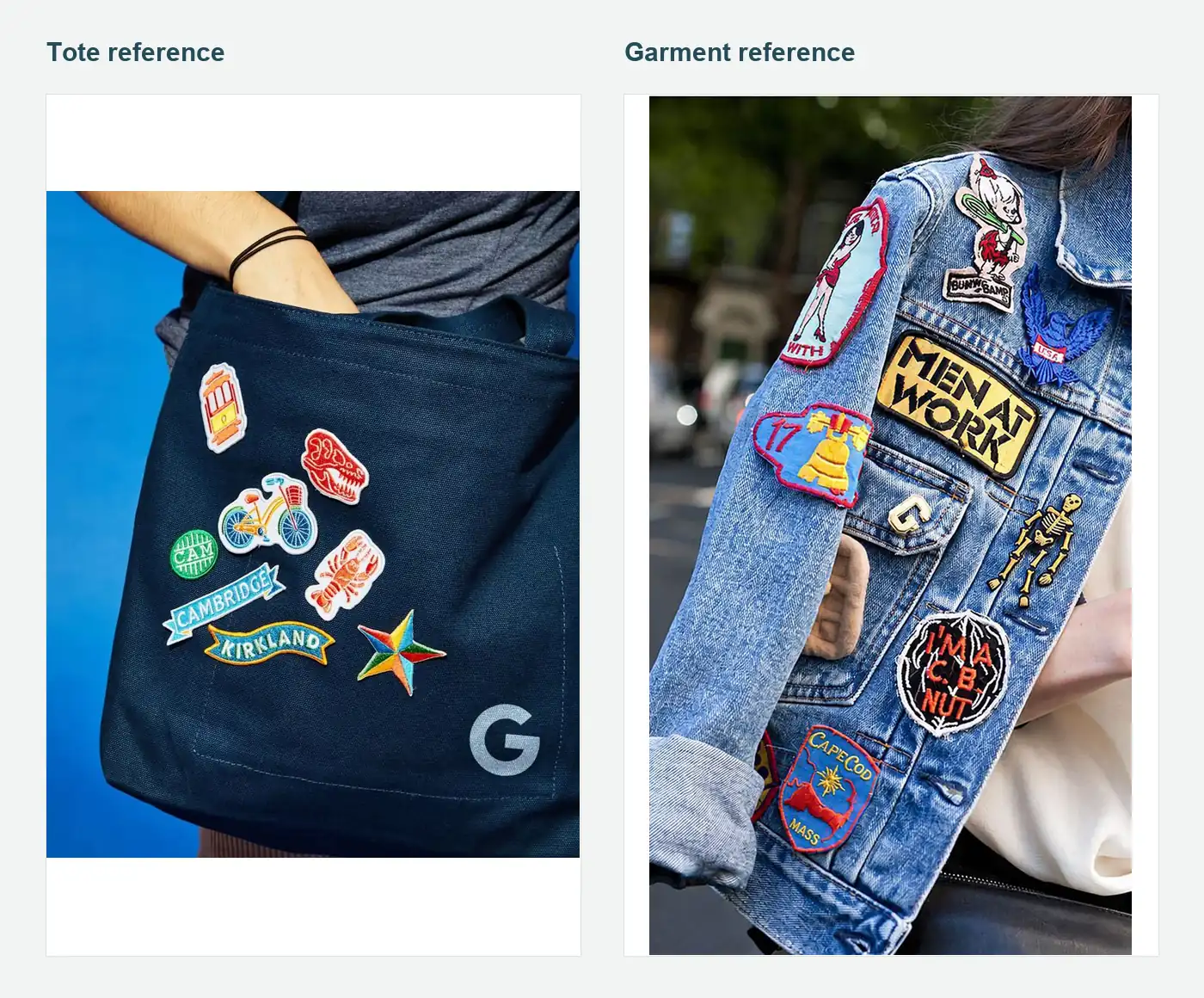
For a first drop centred on separate patches, keep the plan focused on those patches and their saleable packs. If you also want decorated products, identify who supplies the base product, who attaches the decoration and who delivers the finished item. The same artwork can travel through both routes without making their costs or responsibilities identical.
Choose a launch range you can explain
Write a short collection brief before adding options. It should state the theme, the intended customer use and the role of each design. A main motif might carry the identity of the drop; a second could offer a different subject or work as a companion in a set. Another illustration that serves the same purpose may be a candidate for a later release.
For each proposed design, ask what it adds and whether you can complete its artwork, specification, product images and quantity allocation for this launch. A cohesive collection can contain different shapes and subjects. It does not need every design in every possible color, size and backing.
Separate committed choices from ideas. Put confirmed items on the launch sheet and keep possible later additions on a separate list. This gives a supplier a concrete scope to review while leaving room for future development.
Choosing fewer options simplifies the current work; it does not establish how many units will sell. Use your own evidence and constraints when allocating quantities. Avoid treating a supplier’s general minimum, a competitor’s launch or a social-media audience count as a demand forecast.
Keep designs, artwork revisions and stock identities separate
Use four distinct records to prevent the word “variant” from doing too much work:
- Design: the motif customers recognise, such as Star or Wave.
- Approved artwork revision: the exact file version to produce, such as Star R03. A revised draft does not automatically become another launch design.
- Production configuration: a particular combination of approved artwork, finished dimensions, colorway, construction and backing that needs a clear order quantity.
- Retail SKU: your internal identifier for a sellable item or tracked stock unit. Its relationship to the production configuration depends on how you sell and manage the stock.
A larger Star patch or a different backing may need a separate stock identity if customers can order it independently. A two-patch set can have its own retail code while drawing components from existing patch stock. Splitting the delivery of an unchanged configuration across two dates does not, by itself, create a new design.
Keep the approved art version in the production record even if it is absent from the public product name. If a new revision replaces an older file before production, mark the superseded file clearly. If different finished versions will remain in stock together, make them distinguishable for packing and fulfilment.
Build the order from the combinations you actually offer
The following is a fictional planning worksheet for a brand’s first separate-patch drop. Names, dimensions and quantities are illustrative placeholders, not recommended order sizes, demand estimates or YQX minimums. The starting delivery scope is loose patches in bulk; retail packaging is addressed separately.
| Line and approved artwork | Finished size | Colorway | Backing | Qty, patches |
|---|---|---|---|---|
| A1 — Star R03 | 60 × 60 mm | Navy / cream | Iron-on | 60 |
| A2 — Star R03 | 60 × 60 mm | Navy / cream | Sew-on, no adhesive | 20 |
| A3 — Star R03 | 75 × 75 mm | Navy / cream | Iron-on | 20 |
| B1 — Wave R02 | 60 × 35 mm | Teal / cream | Iron-on | 40 |
This worksheet contains two designs, four production configurations and 140 patches. It does not offer a 75 mm sew-on Star or every possible combination of the listed choices. Only create rows for combinations you intend to supply.
The table is a starting structure, not a complete manufacturing specification. Link each row to artwork that records its shape, dimensions, color references, border and other agreed construction details. Identify the actual backing system rather than relying on a photograph of the front.
Do not assume that the total of 140 makes all four configurations eligible for one minimum quantity or price bracket. Ask the supplier which quantities can be combined, which changes require separate development and what conditions apply to each line. Once the scope is clear, use the custom patch cost guide to prepare a like-for-like quotation comparison.
Allocate sets from the same physical stock
Suppose the fictional brand now wants 20 two-patch sets, each containing one A1 Star and one B1 Wave. Allocate 20 patches from A1 and 20 from B1 to those sets. Do not add another 40 patches to the purchase total unless the plan is to order extra stock.
| Sales allocation | Saleable units | Patches used |
|---|---|---|
| A1 Star sold individually | 40 | 40 |
| A2 Star sold individually | 20 | 20 |
| A3 Star sold individually | 20 | 20 |
| B1 Wave sold individually | 20 | 20 |
| Star + Wave two-patch sets | 20 sets | 40 |
| Total | 120 | 140 |
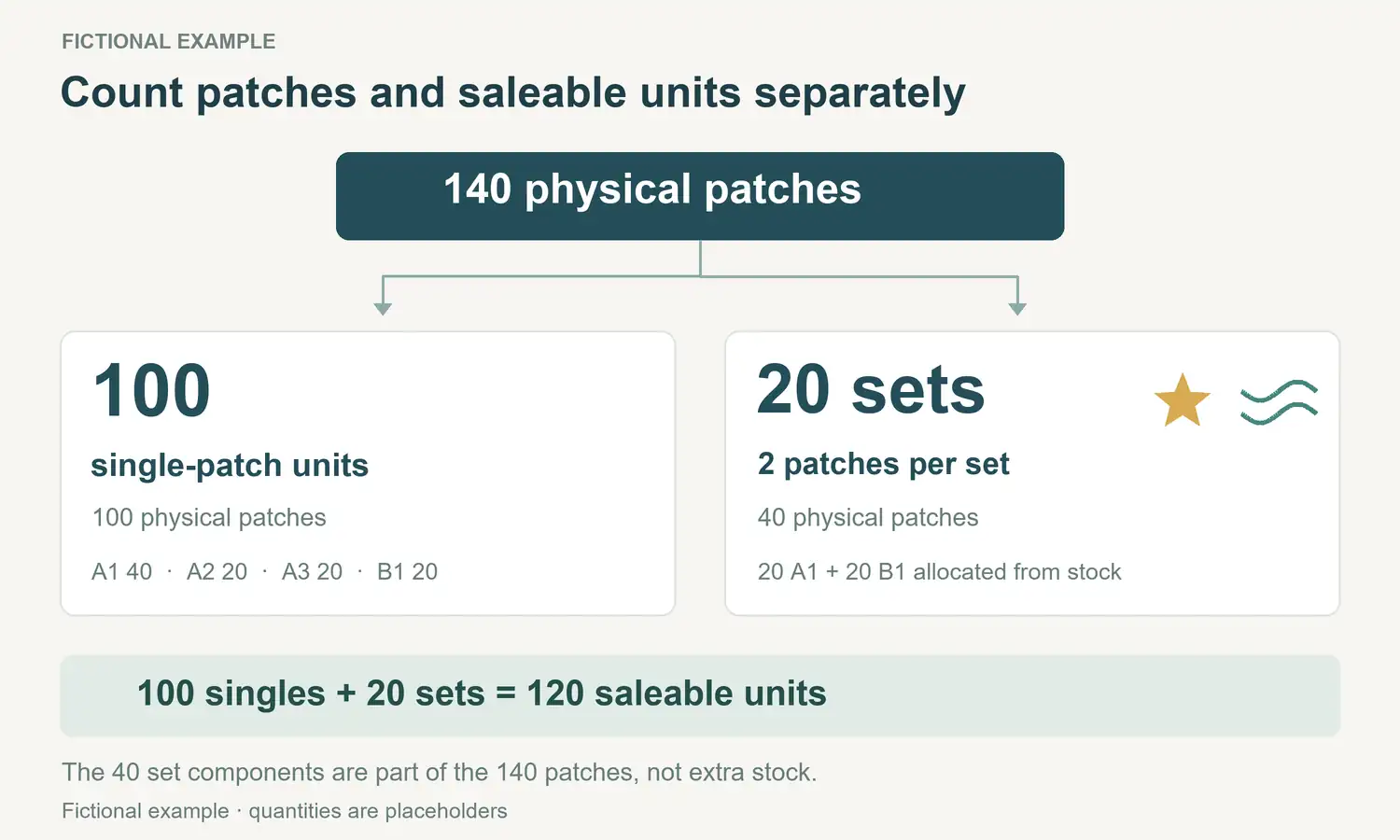
One possible retail structure uses four codes for the individual configurations and a fifth for the set. That is a tracking choice, not five different embroidery designs. If singles and sets share component inventory, make sure the stock process accounts for both uses; separate listings must not make the same patches available twice.
Packaging the sets adds work. Record whether the two patches share one card, retain separate cards or go into a common pack. List the number of cards, bags or boxes and labels required, and who supplies and assembles them. If a supplier is expected to deliver completed retail sets, update the order scope and obtain confirmation of that service and its cost.
Write down what the supplier will deliver
A practical order brief should connect every production line to its final delivery form. Include:
- Contents and quantities: patches counted in pieces, sets counted in packs, and the number of each component per pack.
- Backing and matching parts: the specified backing, any separate receiving pieces and whether installation is included. A loose loop panel is not an installed receiving surface on a garment or bag.
- Packaging and identification: bulk sorting or individual packs, approved card or label files, and the identifier required on each pack or carton.
- Assembly responsibility: who supplies garments or accessories, performs attachment, assembles sets and handles customer fulfilment, where those tasks apply.
- Delivery allocation: quantities for each shipment, destination and required receipt date, with any samples or other reserved pieces accounted for separately.
If 60 identical patches are split into two shipments of 30, keep the production identity clear and add the delivery allocation beneath it. Do not count the second shipment as another design or silently assume split delivery is included in the quote.
Keep descriptions consistent across the artwork, quote, order sheet and retail plan. “20 packs” is incomplete without the contents per pack. “Ready to sell” is incomplete without agreement on packaging and identification. Ask for the specific deliverable you need.
Freeze the scope before releasing the first order
Check that every retained configuration has a quantity and an approved specification. Agree which configurations need a physical sample or other verification; one approved version should not silently stand for every size, color or backing. The sample-before-bulk guide covers that approval process in more detail.
Then review the complete scope against the launch date. Artwork changes, additional variants, packaging and assembly can change the work still to be done. Use the patch lead-time planning guide to connect the confirmed scope to sampling, production, shipping and receipt.
For custom embroidered patches, send YQX the collection brief, approved artwork files, configuration-and-quantity sheet, sales allocation and required delivery form. Use the contact page to request a project-specific review and quotation. Ask which tasks are included and which need a separate arrangement. A clear first-drop plan makes the order reviewable before money and production time are committed.
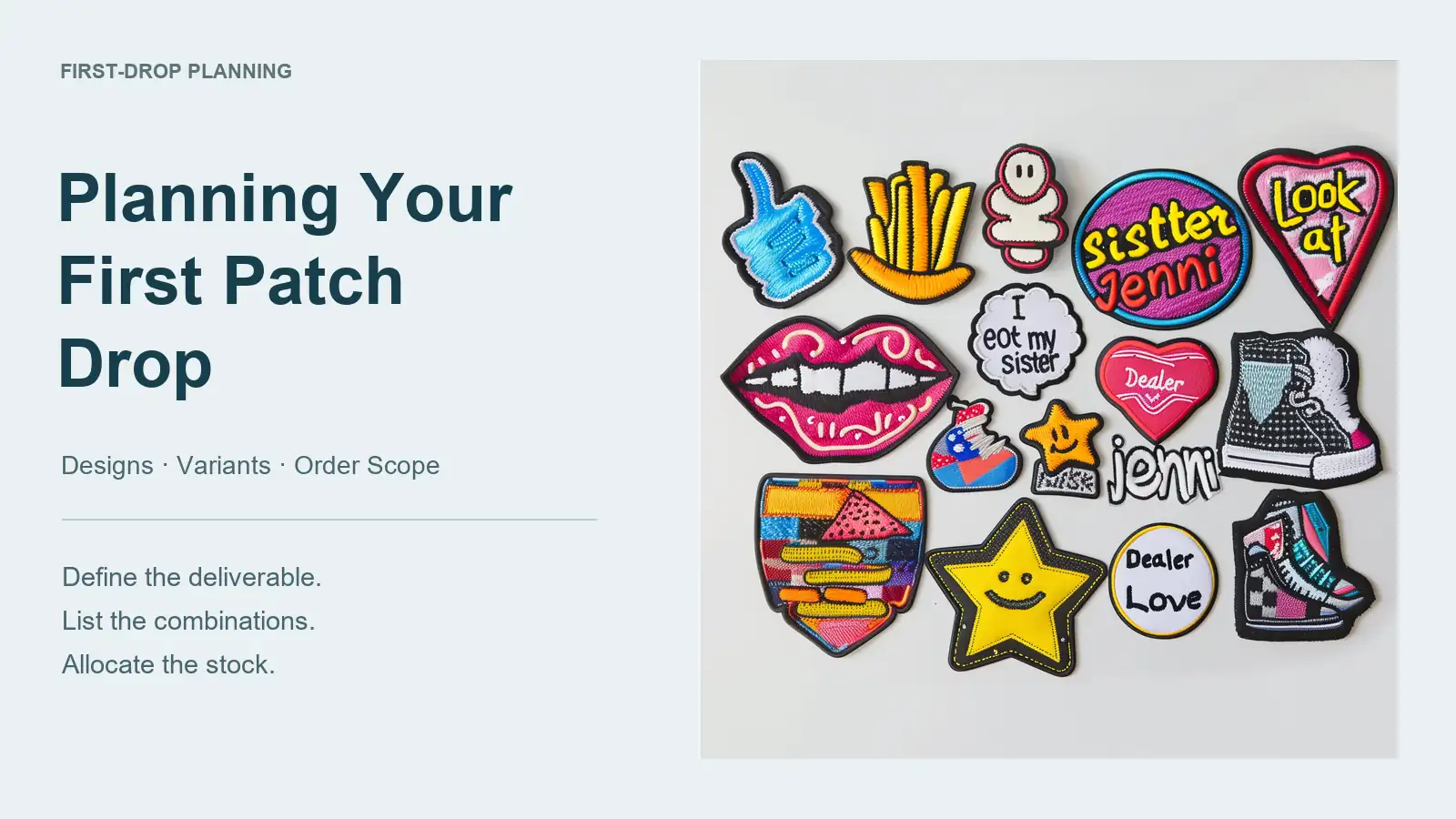
Cover: supplied patch assortment used as a visual reference, not a recommended first-drop range or a verified YQX collection.