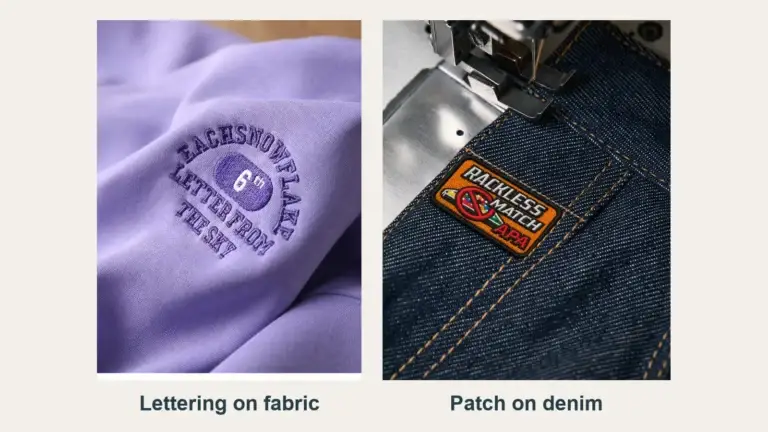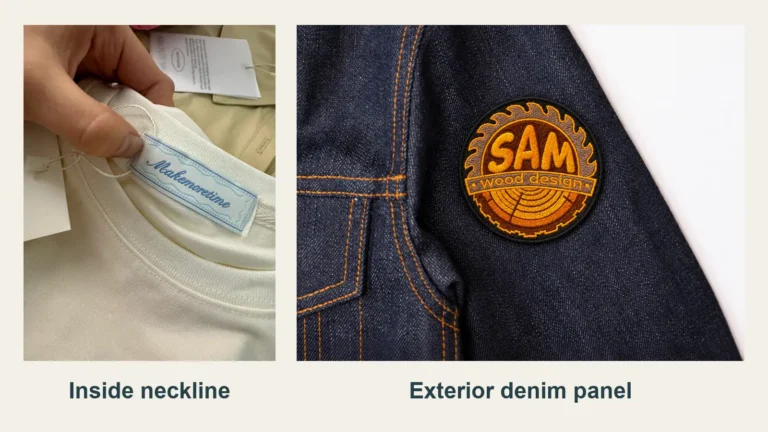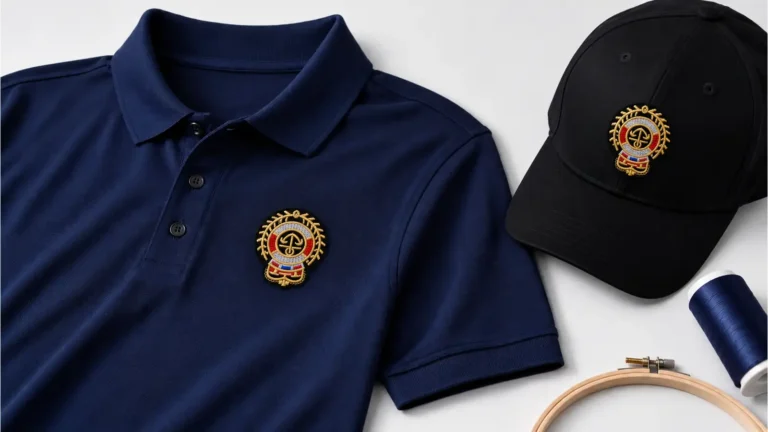
Custom patch cost depends on the specification behind the logo: finished size, order quantity, embroidery coverage, colors, materials, edge, backing and delivery requirements. Full embroidery can increase cost substantially compared with a design that deliberately leaves some base fabric visible. Choose the construction that makes the logo clear and suits the garment; do not pay for full coverage simply because it sounds more premium.
For apparel brands, the useful comparison is the cost of an approved patch ready for its intended use. A low patch-only price can become less attractive once sampling, attachment, packing and delivery are included.
Why the Same Logo Can Receive Different Quotes
A logo file does not define the whole product. One supplier may price a smaller patch with partial embroidery, standard thread and a sew-on finish. Another may assume a fully embroidered surface, a different thread specification, heat-activated backing and individual packaging. The artwork looks similar, but the quotations describe different orders.
Before comparing prices, put the assumptions on one specification sheet:
| Quote item | What to compare |
|---|---|
| Finished product | Width and height, shape, patch type and artwork revision |
| Order breakdown | Quantity per design, size and colorway; whether variants share a price tier |
| Visible construction | Embroidery coverage, base fabric, thread specification and color references |
| Finishing | Border or cut edge, backing and any separate mating components |
| Development | Digitizing, samples, revisions and approval requirements |
| Delivery scope | Packaging, shipping destination, transport service, import charges and delivery terms |
Ask each supplier to mark substitutions and exclusions. A proposed cheaper construction can be worth considering, but it should remain a named alternative so the comparison stays meaningful.
What Changes Embroidered Patch Pricing?
Finished Size and Design Complexity
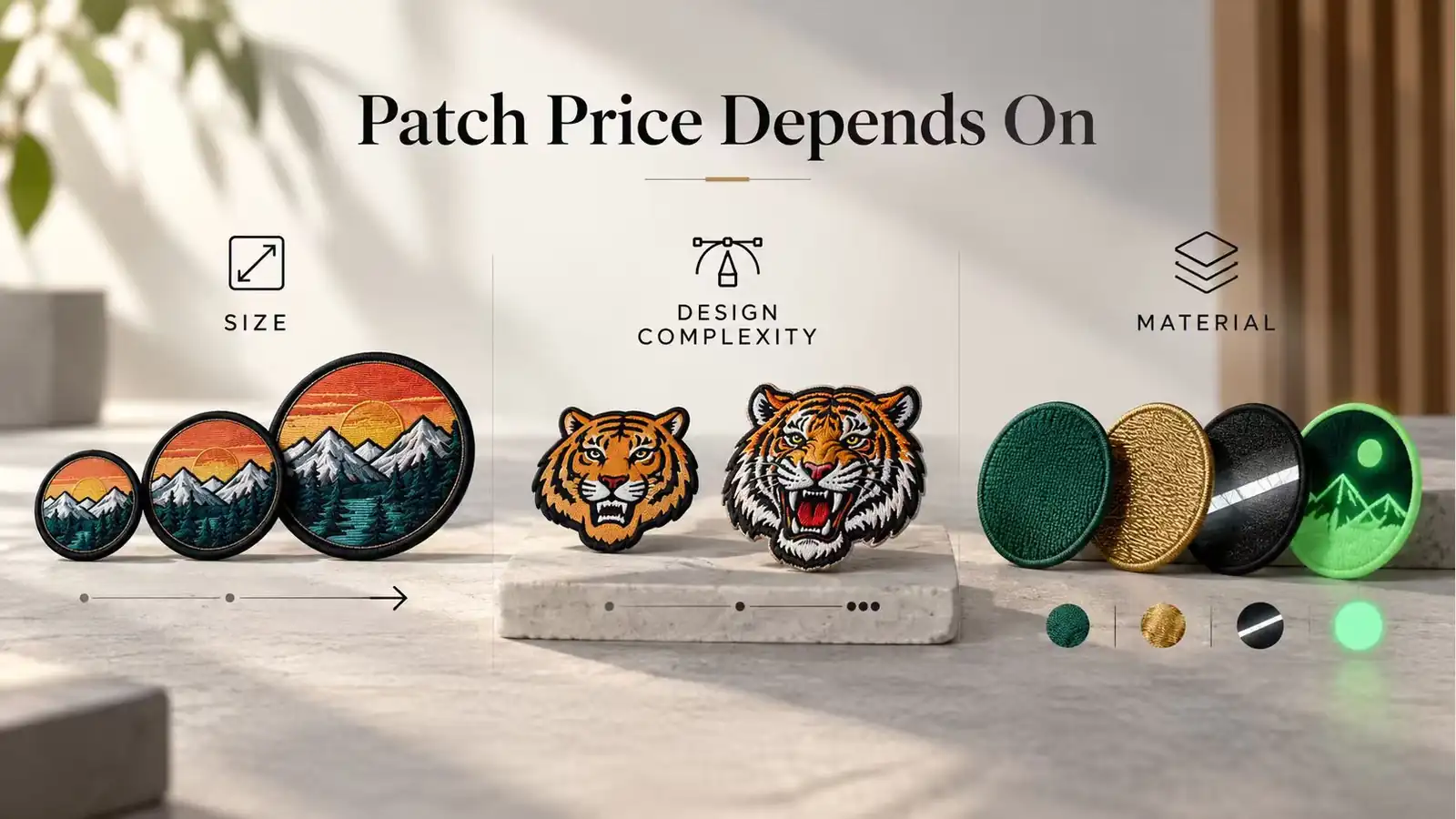
For a comparable embroidered design, a larger stitched area generally requires more material and stitching. However, price does not increase by one universal amount per centimeter. Coverage, stitch layout, shape and finishing also change the work involved.
Small is not automatically economical. Reducing the patch until lettering becomes crowded may require a simpler design or a different construction. Check the artwork at actual finished size and retain the smallest size that still communicates the logo clearly. The embroidery artwork preparation guide explains what to resolve before sampling.
Complexity also includes fine outlines, many small separated elements and difficult contours. Keep recognizable brand features, then ask which minor shadows or decorative details can be simplified without changing the identity of the design.
Embroidery Coverage: Full Stitching Is a Choice
Coverage describes how much of the patch face is embroidered rather than left as visible base fabric. It is different from stitch density within an embroidered area. A partially embroidered patch still needs appropriate stitching and a well-finished edge.
At the same size, with other specifications comparable, more coverage normally adds stitching and cost. Filling a background that could have been supplied by the base fabric can make the price considerably higher. The amount depends on the design and quotation; there is no reliable universal surcharge for moving to full embroidery.
Full coverage gives a more continuous stitched surface. That appearance may suit a particular design, but it is not a requirement for a good-quality patch. A clean logo on a well-chosen twill background can look intentional and professional. Approve the appearance, hand feel and garment placement on a sample rather than treating the coverage percentage as a quality score.
If the background only needs one flat color, ask for both a visible-fabric version and a fully embroidered version. Keep the finished size, thread specification, border, backing and quantity the same to see what the extra background stitching actually costs. For a coverage-only comparison, choose a background thread already in the agreed palette so the filled version does not also introduce an extra color.

Colors and Materials Can Change the Price Too
More Colors Can Mean More Production Work
Extra colors can raise cost, particularly when they add color changes, separate stitched elements or a more complicated production sequence. The number of distinct colors and the number of machine color changes are related, but they are not always identical.
Pricing policies vary. Some quotations include several standard colors in the stated price; others charge for additional colors or particular thread types. Do not assume every extra color always attracts a surcharge, or that an included color adds no production work. Ask what the quote includes and have the supplier price the actual artwork.
A practical design review is to identify colors that carry the brand identity and colors that only create minor shading. Removing an unnecessary near-duplicate shade may simplify production while preserving the main effect. Avoid removing a brand-critical color just to achieve an arbitrary color count.
Material Quality Is Part of the Specification
Raw-material quality directly affects the price. Two visually similar patches may use different base fabrics, threads, stabilizing materials or attachment components. A quote that says only “embroidered patch” leaves those differences unresolved.
Request identifiable material specifications where they matter: thread type or series, base fabric, backing construction and the intended use and care conditions. Compare the physical sample for clear stitching, surface appearance, edge finish and suitable hand feel. If the application needs particular washing or attachment performance, agree how that will be checked on the actual garment.
Choose materials that meet the requirement. A specialty thread or construction may cost more and serve a useful purpose, but a higher price alone does not prove better suitability. Equally, do not reduce an agreed material grade silently to meet a target price. Have the supplier quote the substitution separately and approve a new sample when the change affects the result.

Compare Three Versions of the Same Design
Use controlled alternatives to decide whether an upgrade earns its cost. The following is a quotation exercise, not a price list or a measured production comparison. Keep the finished size, quantity, thread and fabric grade, border, backing, packaging and delivery scope fixed.
| Configuration | What changes | What the comparison answers |
|---|---|---|
| A: selective embroidery | Stitch the essential logo and leave a suitable base fabric visible; use the agreed core palette | Does the simpler construction already deliver the required appearance? |
| B: full embroidery | Fill the background as well; retain A's palette and all other specifications | What is the quoted difference for fuller coverage? |
| C: full embroidery with added color detail | Retain B's coverage and material specification; add optional shading colors and detail | Is the extra visual detail worth the revised price? |
Compare A with B to discuss coverage, then B with C to discuss the additional detail. Ask the supplier to identify any other construction changes required to make each version workable. Do not describe C's increase as a pure “per-color fee” when the artwork and stitching sequence also changed.
If you also want a different thread or backing grade, request it as a separate option against one selected configuration. This prevents a material substitution from being confused with savings from reduced coverage.
Add Application, Development and Delivery to the Budget
Backing and Attachment
Backing changes both the patch specification and the work needed to attach it. A sew-on patch still requires sewing. A heat-applied patch needs a compatible garment, a controlled application process and verification. A hook-backed patch may also require a suitable loop panel on the garment; confirm whether both sides and their installation are included.
A cheaper attachment option is not a saving if it is unsuitable for the fabric or use. Compare the patch price together with attachment labor, any separate components and the required trial. Use the patch backing selection guide to narrow the options before requesting alternatives.
Quantity, Samples and Revisions
A larger order of the same approved specification can spread development and setup work across more units. That does not mean every supplier uses the same price tiers or combines different designs into one tier. Request the intended quantity and one realistic alternative, with each design and variant listed separately.
Do not buy unwanted inventory solely to obtain a lower unit price. Compare the total cash commitment and the quantity you can use. Ask whether digitizing, physical samples, revisions and repeat-order setup are included, separately charged or subject to conditions. File retention and repeat pricing should be confirmed rather than assumed.
Packing, Shipping and Receiving
Bulk packing and individual presentation packs involve different work and materials. Shipping also depends on the agreed destination, parcel and service. Compare quotations on the same delivery scope, including who pays import charges where applicable.
Confirm the required receipt date early. An avoidable rush-production request or express shipment can offset savings made by simplifying the patch. Separate production completion, dispatch and receipt when reviewing the schedule. The custom patch lead time guide provides a reverse planning method.
Calculate Cost per Usable, Attached Patch
For internal budgeting, use a consistent project total:
Total project spend = patches + separately charged development and samples + packing + transport and applicable import charges + attachment and agreed verification work.
Count each item once; do not add a fee again if it is already included in the patch or delivery price. Divide the total by the number of acceptable, attached patches available for the intended use. At the quotation stage, use a planned quantity with explicit assumptions; after delivery and attachment, use the actual accepted output. Include units used for sampling or verification in those assumptions rather than inventing a standard rejection rate.
This comparison helps explain why the lowest quoted patch price may not produce the lowest finished-garment cost. It also makes a saving visible: reducing unnecessary background embroidery helps the budget when the revised sample still meets the appearance and use requirements.
Request a Quote That Shows the Trade-Offs
Send one reference specification and identify the changes you are willing to consider. Ask for the base quote and separately priced alternatives for coverage, optional colors or detail, and material substitutions. Include the artwork revision, finished dimensions, quantity per version, target fabric and placement, backing, care requirements, packaging, destination and required receipt date.
The B2B embroidery quotation checklist helps organize those inputs. Ask the supplier to state what is included, what is excluded, which sample approves the order and how long the quote remains valid.
For a YQX custom embroidered patch project, send the reference design and budget priorities through the quotation contact page. State whether you prefer a simpler visible-fabric background or want to compare it with full embroidery. A clear, well-made patch that meets the garment's needs is a better purchasing target than maximizing coverage, colors or material cost by default.
Featured image note: Supplied illustration of size, design complexity and material effects. It is not a quotation, material specification or performance test.