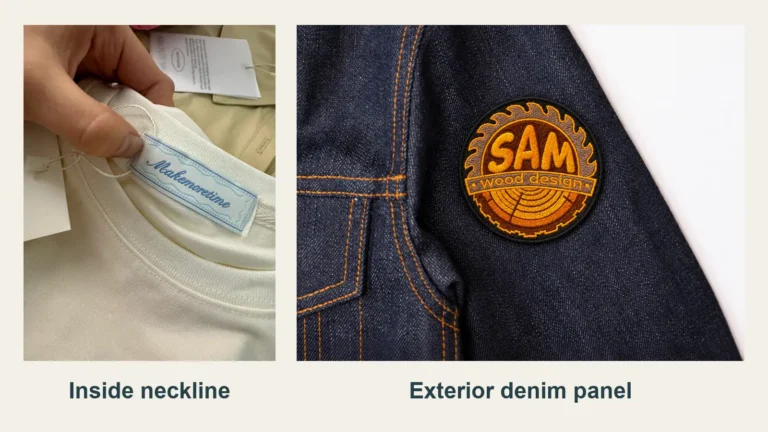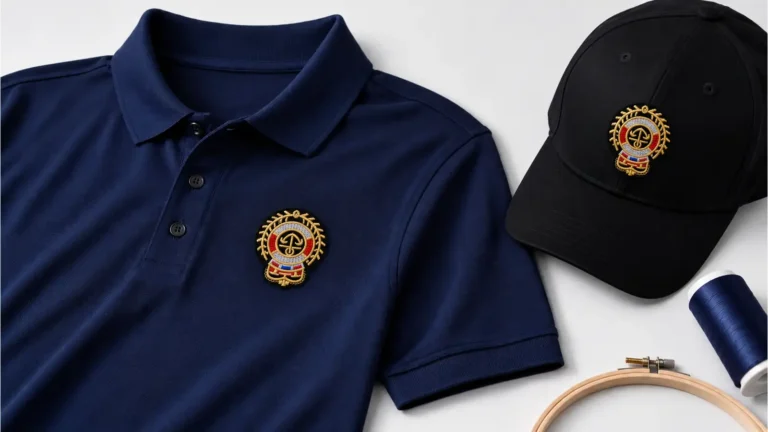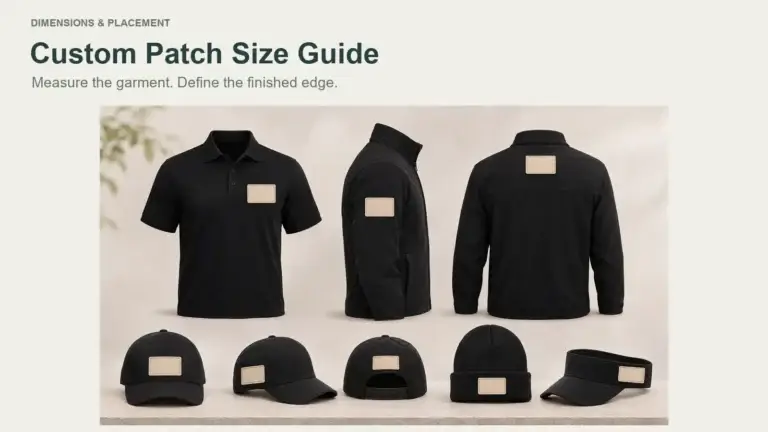
Choose direct embroidery when the logo should sit in the garment fabric and the embroiderer can reach the intended position on a cut panel or an assembled garment. Choose a separate embroidered patch when the brand needs to make or stock the logo independently, or change it later with a suitable attachment. Before choosing, price both routes through the same handover point. A quote for loose patches covers fewer operations than a quote for finished, decorated jackets.
Use the same artwork revision, logo size, position, garment specification and accepted delivery quantity for both quotes. Confirm the stitch file for each material, since the jacket fabric and patch base may need different settings. Approve a garment sample for each route so the differences in edge, feel and appearance are visible before production.
Check access at the intended production stage
Direct embroidery on cut panels. Send the panel, size and orientation reference, seam allowance and placement drawing. Agree how the embroidery will line up with the finished garment once the panel is sewn into place. The factory should check the actual fabric and stabilizer, confirm the stitch file on that fabric and inspect the decorated panel before it goes into assembly. YQX describes this service on its garment panel embroidery page.
Direct embroidery on finished garments. Give the decorator an actual garment or an exact construction sample. Have them check whether the target layer can be held securely, whether the frame fits through the opening and where the lining, pocket bag or zipper sits relative to the needle path. Ask what would need to open or be resewn if the chosen position is difficult to reach. Different frames serve flat fabric, assembled garments and some pockets or sleeves. Tajima embroidery frame guide
Separate embroidered patches. Agree the base, edge, backing and outer dimensions, then decide who attaches the patches and when. A patch might be sewn on while the garment panel is still open, or attached later if the finished construction allows access. Approve the installed patch on the same garment construction. For a removable patch, include the receiving side of the fastener and its installation if the garment needs one. See the available constructions on the embroidered patches product page.
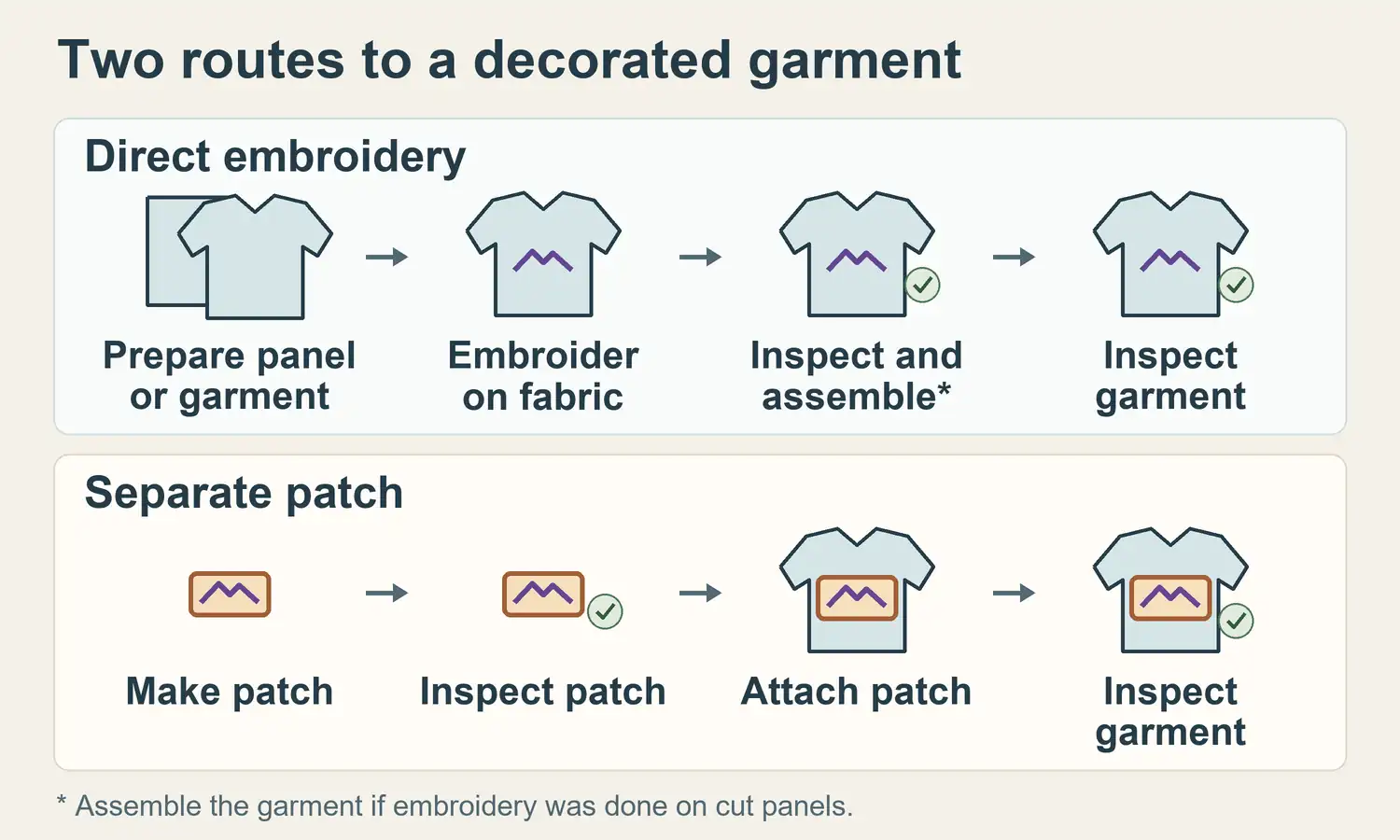
Compare two bills of materials for the same order
Suppose a brand needs 300 accepted jackets in the same size and color mix, with one 55 mm wide logo at the left chest. The 55 mm dimension refers to the artwork itself. Give the patch maker the required outer dimensions as a separate measurement to account for its border. The quantities below describe this example. Agree actual material allowances and spare quantities with the makers.
| Material or component | Direct embroidery | Separate sew-on patch |
|---|---|---|
| Garment inputs | Jacket materials, including one target panel per jacket, or one finished blank per jacket for a post-assembly job. | Same jacket specification and size mix. Agree which stage receives the patch. |
| Decoration | Embroidery thread and the stabilizer or topping agreed for the actual jacket fabric. | One accepted embroidered patch per jacket, made with the specified base, thread, edge and backing if needed. |
| Attachment materials | Include any lining or seam materials required if the finished garment has to be opened and closed. | Include sewing thread and any support agreed for the patch application. |
| Samples and spares | Identify any panels or blanks needed for sample approval, agreed allowance and replacements. | Identify sample garments and patches, plus agreed patch spares and replacement garment inputs. |
Keep the bill of materials separate from the production charges. Ask the suppliers to price the operations below and identify their handover points. If a quoted line bundles several operations or materials, record the inclusions before you add the totals.
| Quote line | Direct embroidery | Separate sew-on patch |
|---|---|---|
| Setup and sample | Stitch file review, fabric trial and sample on the intended garment construction. | Patch file review, patch sample and a separate installed sample. |
| Bulk decoration | Handling and framing, embroidery, trimming and inspection. Include transfers to and from the decorator, plus any extra opening and resewing needed for access. | Patch manufacture and inspection, counting, transfer to the garment factory, positioning and sewing, then installed inspection. |
| Loss and rework | Price the agreed remedy for a rejected cut panel or finished blank, including recutting or reassembly where applicable. | Price the remedy for a rejected patch before attachment and for an installation defect on the garment. |
| Final delivery | Standard garment assembly where needed, final inspection, packing and freight to the named handover point. | Same assembly, inspection, packing and delivery scope. |
For this example, add the buyer's charges in the same currency through the agreed delivery point and divide by 300 accepted jackets. Include shared garment costs once in each route. If the quote excludes a charge, get a comparable figure for it from the party doing the work. Direct embroidery can eliminate patch manufacture and attachment charges. Its access, handling and replacement costs still depend on the job. Separate production can be useful when a brand needs to stock the logo across runs, with attachment and inventory costs included in the comparison.
Assign responsibility before production
Record who supplies and counts panels or blanks, who signs off the first production pieces, and who releases the finished order. Set acceptance criteria for placement, stitch appearance and garment condition. Agree how defects are documented and how repair, recutting or replacement is approved. Specify who supplies replacement material, pays for the additional work and freight, and makes up any shortfall by the agreed date.
A rejected direct embroidery panel found before assembly may be replaceable if matching material and cutting capacity are available. A fault on a finished garment puts that completed unit at risk. With separate patches, the maker can screen rejected patches before they reach the garment line. Once attachment starts, a mispositioned or poorly sewn patch can still require garment rework or replacement. Confirm the remedy at each stage in the purchase order.
Plan for replenishment and changes
For direct embroidery, retain the approved stitch file version, placement by garment size, thread references and an approved sample. Confirm whether the matching fabric or blanks will be available for the next run. For patches, retain the approved patch specification, attachment instructions and installed sample. Check both usable patch stock and compatible garment stock before releasing a reorder.
If a direct embroidered logo needs to change, price newly decorated garments or try removing and restitching the logo on a sample before committing to a retrofit. For a removable patch, test the replacement against the actual receiving surface. If you plan to replace a sewn patch, try removing it from a sample garment and check for visible stitch marks. Agree who holds spares and who makes the change.
For a quote, share the artwork, target logo size, garment construction, placement, quantities by size and color, and expected handover point. Identify whether you need decorated panels, loose patches, or finished garments, then ask which operations each supplier can quote. Contact YQX about your apparel project.
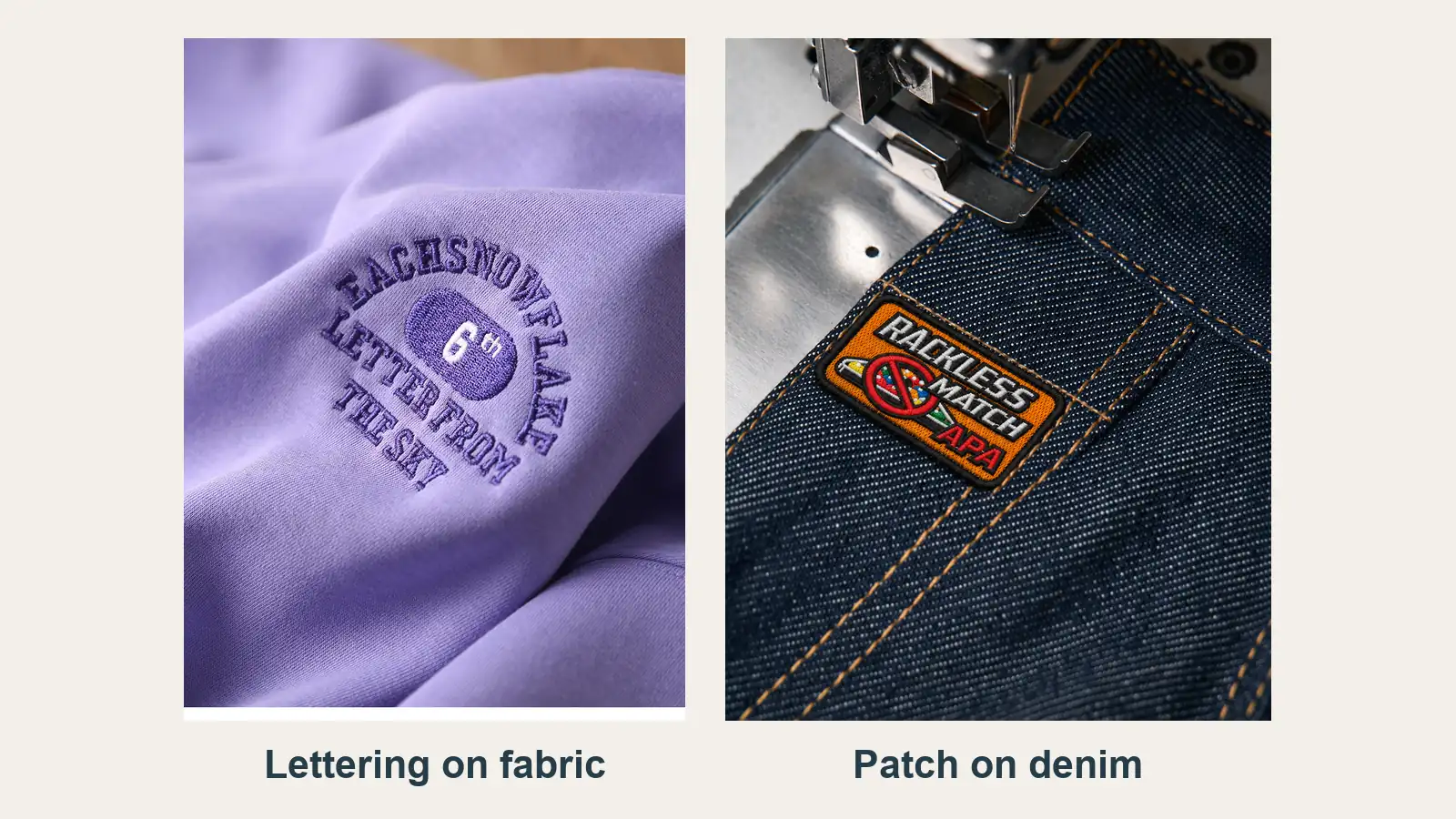
Cover references show lettering on purple fabric and a separate embroidered patch on denim near a sewing machine. The two images illustrate different constructions.