Yes. YQX can produce custom embroidered patch samples before bulk production so you can review the finished size, stitching, colors, border and backing. Before starting, agree on what sample you will receive, the sample charge and shipping, the revision arrangements and any credit toward a later order. Approve an identified sample revision before authorizing bulk production.
A digital proof, a photograph of a sewn patch and a physical sample answer different questions. Choosing the right review stage helps you find problems early and understand exactly what your approval covers.
Choose the right kind of sample
If you want to assess a supplier's general workmanship, an existing reference patch may help. If you need to approve your own logo at its intended size, request a custom sample made to the proposed production specification. A collection of previous designs cannot settle whether your small lettering, border or backing will work.
| Review item | What it helps you check | What it does not establish |
|---|---|---|
| Existing reference patch | General texture, workmanship and examples of available finishes | The result for your particular artwork and construction |
| Digital proof or stitch preview | Layout, spelling, dimensions and proposed design changes | The actual sewn surface, physical color or attachment result |
| Photograph of a sewn sample | Visible appearance of a particular stitched revision | Feel, reverse construction or reliable physical color approval |
| Physical custom sample | Your design's actual surface, shape, size, handling and specified backing | Uniform results throughout a future production run |
Ask whether the physical sample will arrive fully finished, including the proposed edge and backing. A trial stitch-out on a sheet of fabric can help assess embroidery, but it is not automatically a finished patch ready for attachment testing.
Send a brief that defines the custom sample
Provide the clearest available artwork, the target width and height, the expected bulk quantity and the intended product. Identify the base fabric, border and backing you want to evaluate, or ask the supplier to recommend options before sampling begins. Mark essential lettering, logo details and brand colors so that proposed simplifications are discussed rather than silently accepted.
For attachment review, include the garment or accessory material, placement and expected care. A sample for a cap, jacket or bag should be developed with its actual use in mind. If you have a previous approved patch, identify which details must be retained and which may change.
The artwork preparation guide explains the design files and specification details to organize. If several sizes or colorways are planned, list them separately and agree which variants will be sampled. Approval of one version should not silently cover all the others.
Also state whether this is a sample-only purchase or part of a planned bulk program. A development sample and a small saleable order can have different quantities, finishing and commercial arrangements. Have the quotation identify what you are buying.
Confirm sampling cost, shipping and any later credit
Request an itemized quotation for the actual design. Sample preparation may involve digitizing, material selection, machine setup, stitching and finishing. Confirm which work is included rather than comparing a sample-piece price with another supplier's complete development package.
Use these questions before authorizing the sample:
| Cost or term | What to confirm | Why it matters |
|---|---|---|
| Artwork and digitizing | Included work, separate setup charges and arrangements for retaining files | Avoids assuming a sample fee covers every preparation task |
| Sample pieces and variants | Number of finished samples, sizes, colors, borders and backing options | Defines the actual comparison you will receive |
| Revisions and remakes | Included rounds, what counts as a change and when extra charges apply | Makes correction and redesign costs easier to distinguish |
| Shipping and receiving | Destination, service, courier charge and responsibility for import charges | Separates a sample price from the cost of receiving it |
| Credit toward bulk | Eligible order, qualifying conditions, credit amount and invoice treatment | Distinguishes a conditional future credit from a free sample |
If a sample charge can be credited toward a later bulk order, have that arrangement written into the current quotation. Confirm whether it applies to the same design and specification, whether an order quantity or value condition applies, and whether courier or other development charges are excluded. A credit against a later invoice is different from a cash refund.
Do not assume the sample will be free if you decide not to proceed. Confirm the sample-only charge and any cancellation or refund arrangements before payment. Likewise, a supplier's published sampling offer does not describe every revised design, specialty material or shipping destination; the quotation should state the terms for your project.
If you are comparing suppliers, send the same specification and ask each to separate development, sample pieces, revisions and delivery. The embroidery quotation checklist helps make those requests comparable.
Review the digital proof before the patch is sewn
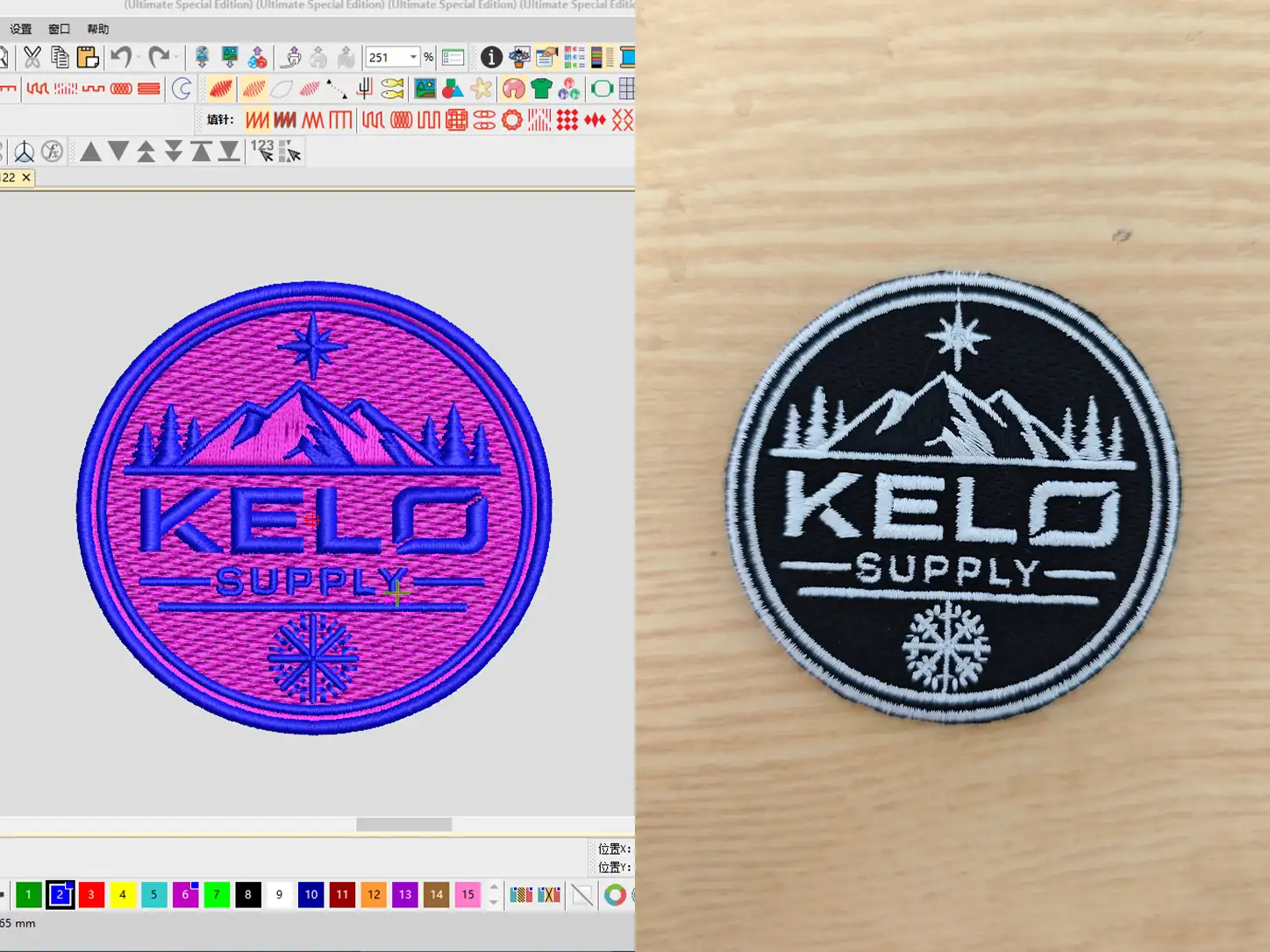
Check the artwork version, wording, orientation, dimensions, color locations, outline and proposed border. Ask the supplier to identify changes made for embroidery, especially simplified small lettering, fine lines or gradients. Confirm which color references and materials will be used for the stitch-out.
The screen colors in digitizing software may be working display colors rather than the final production thread choices. Ask for the intended thread references; do not infer them from a screenshot's color palette. Save the approved proof with a version or date so that the sewn result can be traced back to it.
Digital approval should clearly mean permission to make the sample. It should not also mean permission to start the entire bulk order unless that is the decision you intend and the scope has been agreed.
Review the actual stitched and finished sample
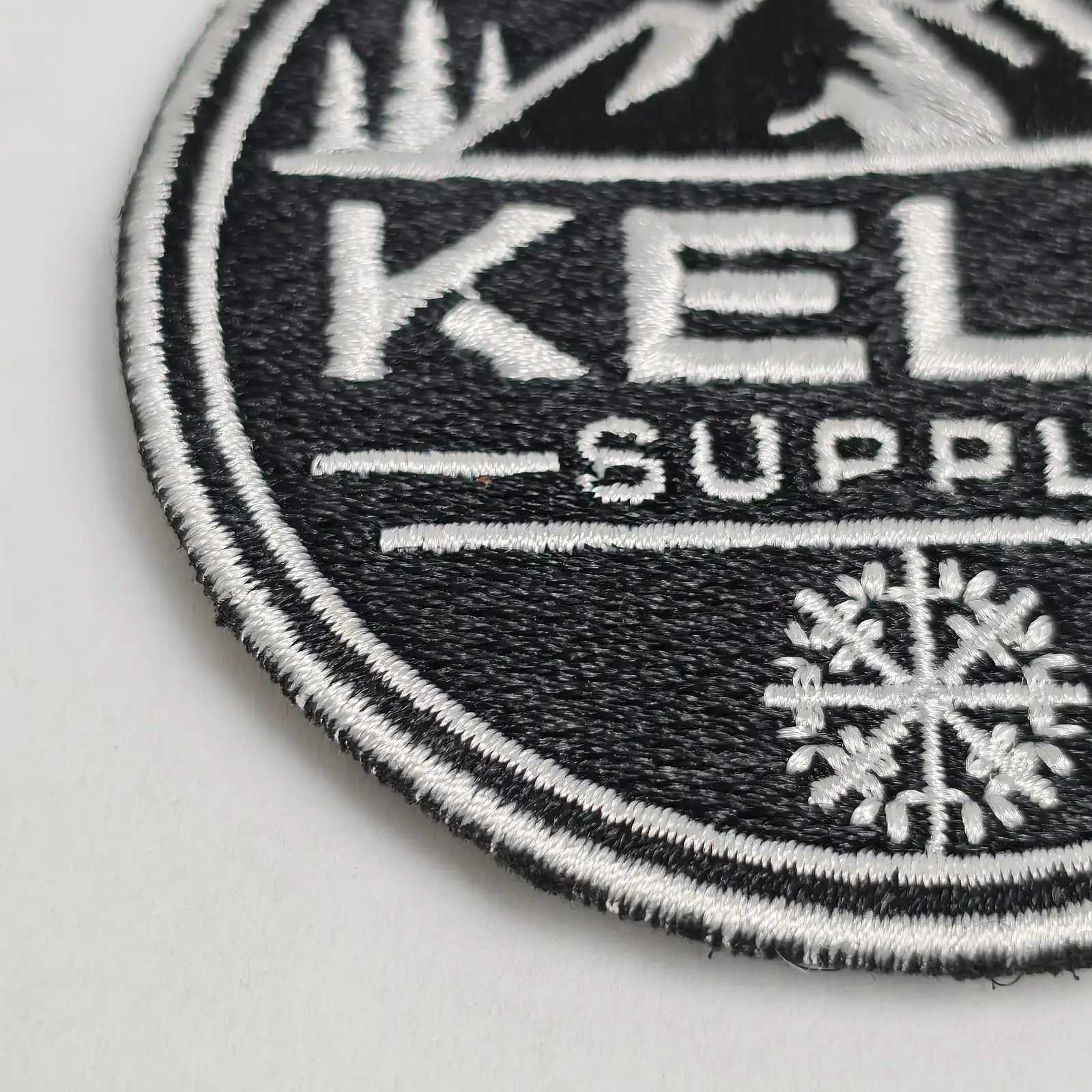
Compare the sample with the approved brief at its intended size. A highly enlarged close-up can reveal stitch and edge details, but it does not tell you whether the lettering reads well on the actual product. Use both the normal viewing distance and a closer inspection.
Fabric support and stitching can change the sewn outline. Hatch's pull-compensation guide explains why gaps and alignment problems may become visible in a stitch-out even when the screen representation looks complete.
Check the points that will determine whether you can use the finished patch:
- Size and outline: measure the agreed points and check the shape, border position and spacing around the design.
- Lettering and detail: review spelling, legibility, gaps and any simplifications accepted during development.
- Surface and finish: look for exposed areas, puckering, loose threads, unwanted connections or edge irregularities that need discussion.
- Color: compare the identified thread and stitched appearance with the agreed physical reference under suitable, agreed lighting.
- Reverse and backing: check the specified construction and any separate mating component; a front photograph cannot establish the reverse.
- Application: where attachment or care performance matters, arrange a suitable trial on the intended material before approving bulk application.
Agree in advance how appearance differences will be judged. A sample photograph does not create an unspoken numerical tolerance, and approval of the front design alone does not confirm a backing or application method you have not reviewed.
If you need several physical samples for different approvers, attachment trials or care checks, request them in the sample scope. Some checks may consume or alter a sample. Retain an unchanged approved reference for comparison rather than using the only reference piece for every test.
Handle revisions as a defined development round
Send one consolidated list of corrections, with marked photographs or a clear reference to the sample version. Separate an error against the agreed brief from a new design request. Changing the size, fabric, thread, lettering or backing may require different development work from correcting a misspelled word; have the supplier confirm the charge and next step.
Ask whether the next review will use a revised proof, a new sewn photograph or a replacement physical sample. For a change that affects the feature you are approving, review appropriate evidence of that change before release. Do not assume that a revised screenshot proves the revised embroidery has been sewn.
There is no universal number of included sample revisions. Agree the rounds, the changes they cover and any additional fees before starting. Give one person responsibility for consolidating brand, sourcing and garment-team feedback so that conflicting requests do not create avoidable rounds.
Sampling time also depends on how quickly specifications, feedback and materials are confirmed. Ask for separate dates for proof review, stitching, any remake, dispatch and receipt. The custom patch lead-time guide explains how those stages fit into the production schedule. Avoid treating a sample completion date as the date an overseas parcel will arrive.
Record approval before releasing the bulk order
Identify the accepted artwork and sample revision, finished dimensions, thread references, base, border, backing and any agreed appearance limits. Record who approved it, when, and which sizes or colorways the decision covers. Retain the physical reference where practical and keep the corresponding photos and specification together.
Use an unambiguous decision. For example, changes required — bulk production not released tells the supplier to continue development. Approved for bulk production against the identified sample and specification is a different instruction. If a correction remains open, say what evidence you need before giving the second instruction.
Sample approval also needs to be connected to the bulk order: confirm the final quantity, packaging, price, delivery arrangements and production release. Paying for sample development does not, by itself, communicate all of those decisions.
A single approved patch establishes a reference for production; it does not prove that every future unit will conform. Agree how the supplier will compare production with the reference and report material or construction changes. For repeat orders, identify the retained version and confirm that the specified materials and thread are still available.
To request custom embroidered patch samples from YQX, send your artwork, target size, quantity, intended product, backing preference, delivery destination and review deadline through the project inquiry page. State which physical sample and variants you need, then ask for the current sample cost, revision scope, shipping and any bulk-order credit in writing.
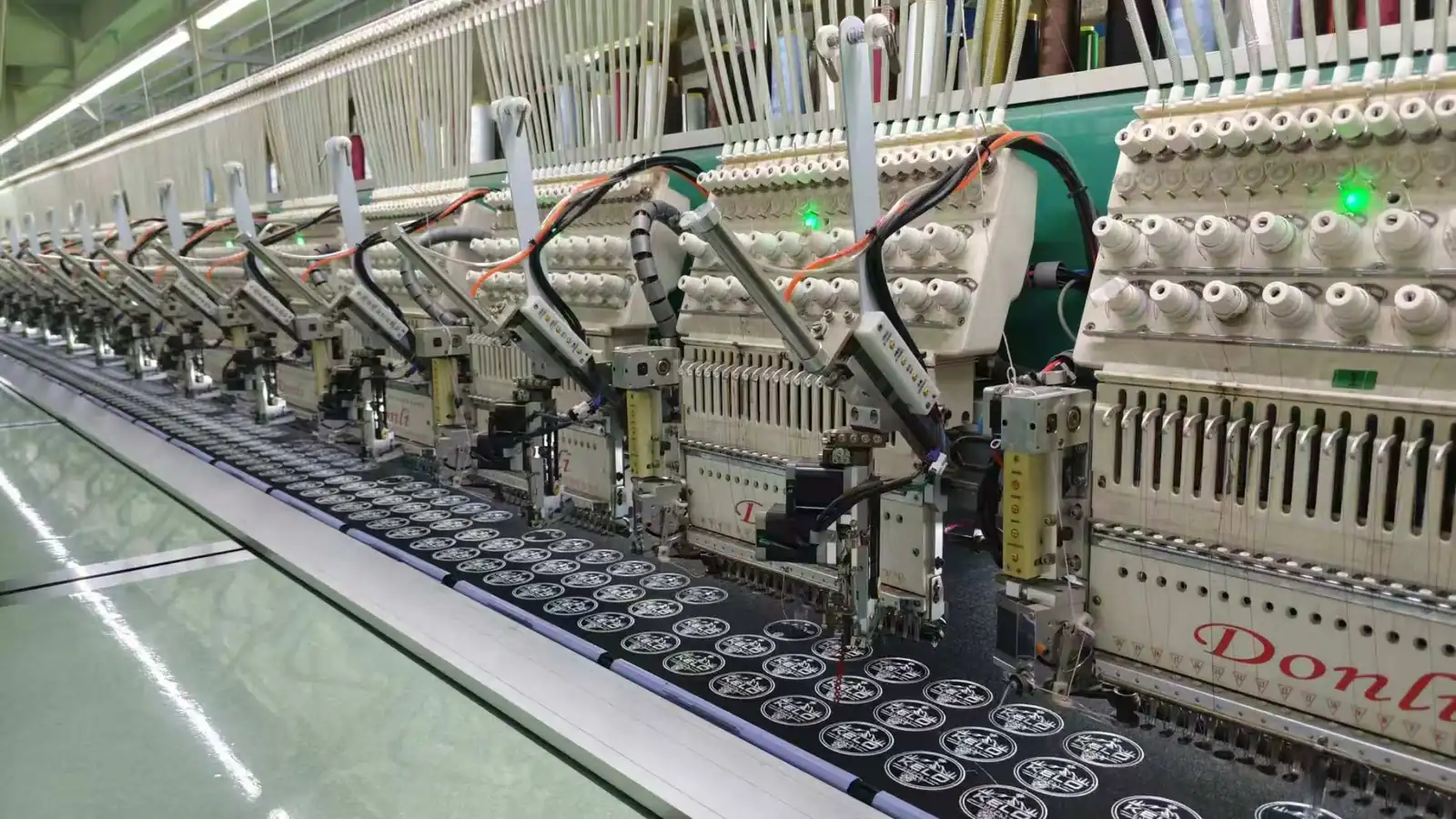
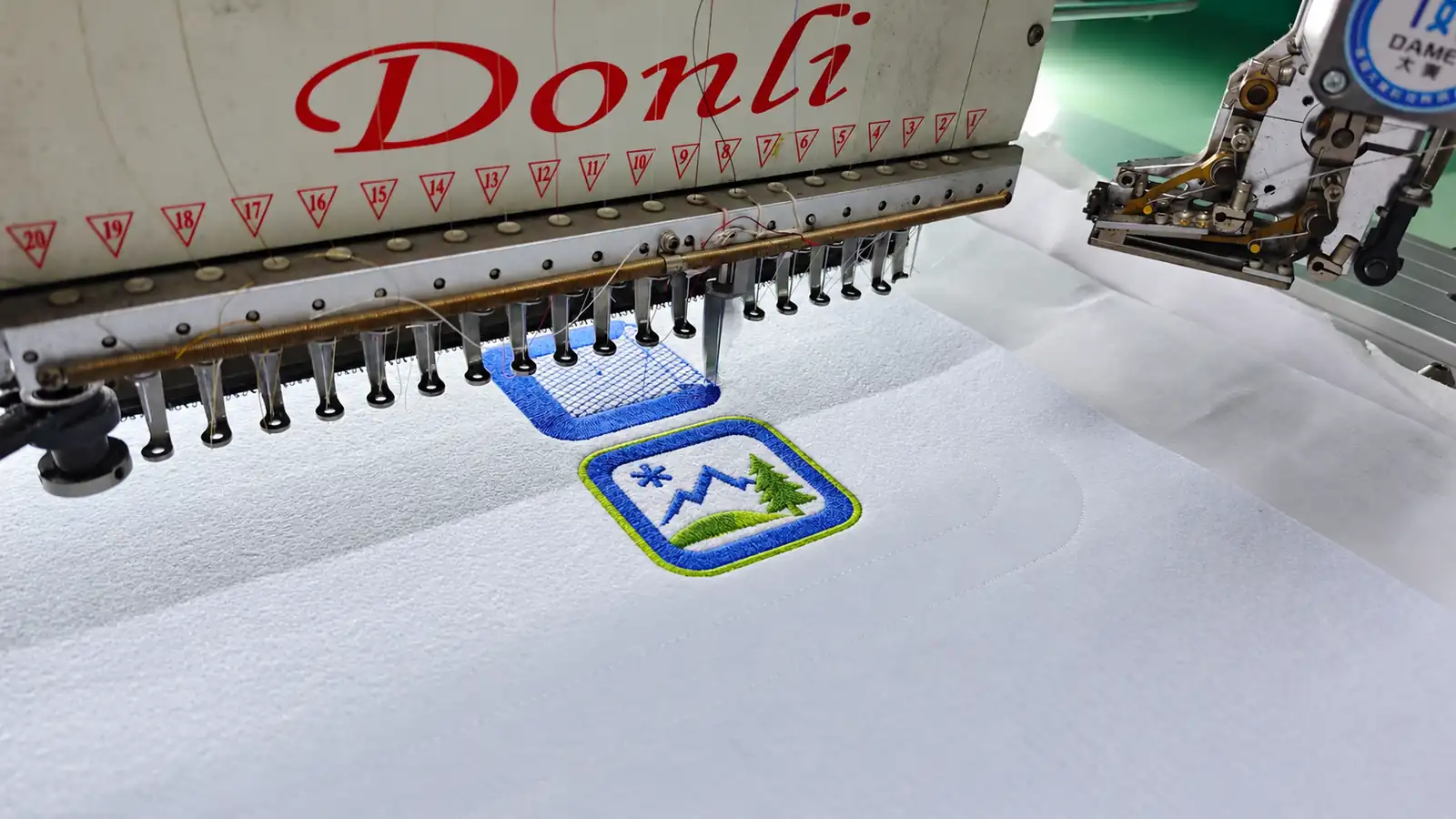
Cover: Supplied multi-head embroidery reference showing repeated circular designs. It illustrates production work and does not verify factory ownership, output, sample approval or bulk conformity.