For repeatable logos, branded patches and garment programs, machine embroidery is usually the practical starting point. Hand embroidery makes sense when the maker's work, individual treatment or a particular hand-worked technique is part of what the customer is buying. It is not limited to one-off artwork: commercial fashion, bespoke pieces and limited collections can also use handwork. A combination of machine embroidery and selected hand finishing is another option.
Choose around the product, order and selling proposition rather than assuming that handmade is always better or that a machine removes all human skill.
What Is the Difference Between Hand and Machine Embroidery?
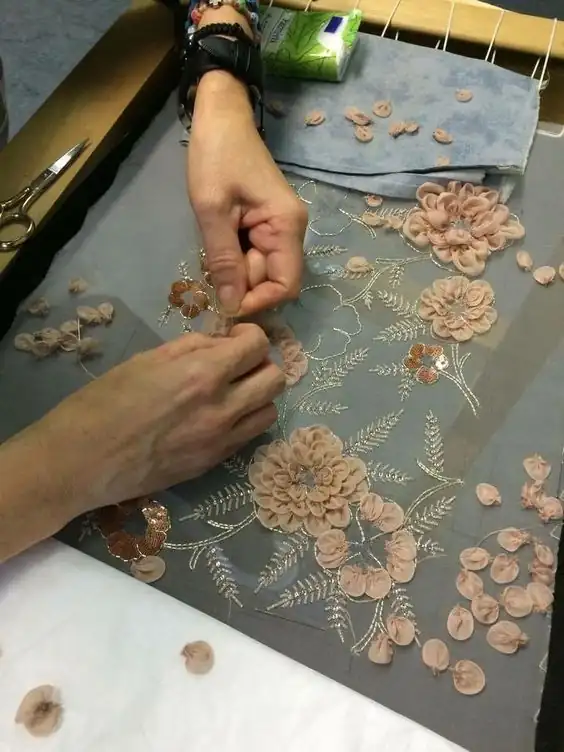
With hand embroidery, the maker controls the placement and formation of stitches manually. The work can use different stitch types, thread combinations and surface treatments according to the intended result. A hand-worked piece can be highly disciplined; visible irregularity is not a requirement.
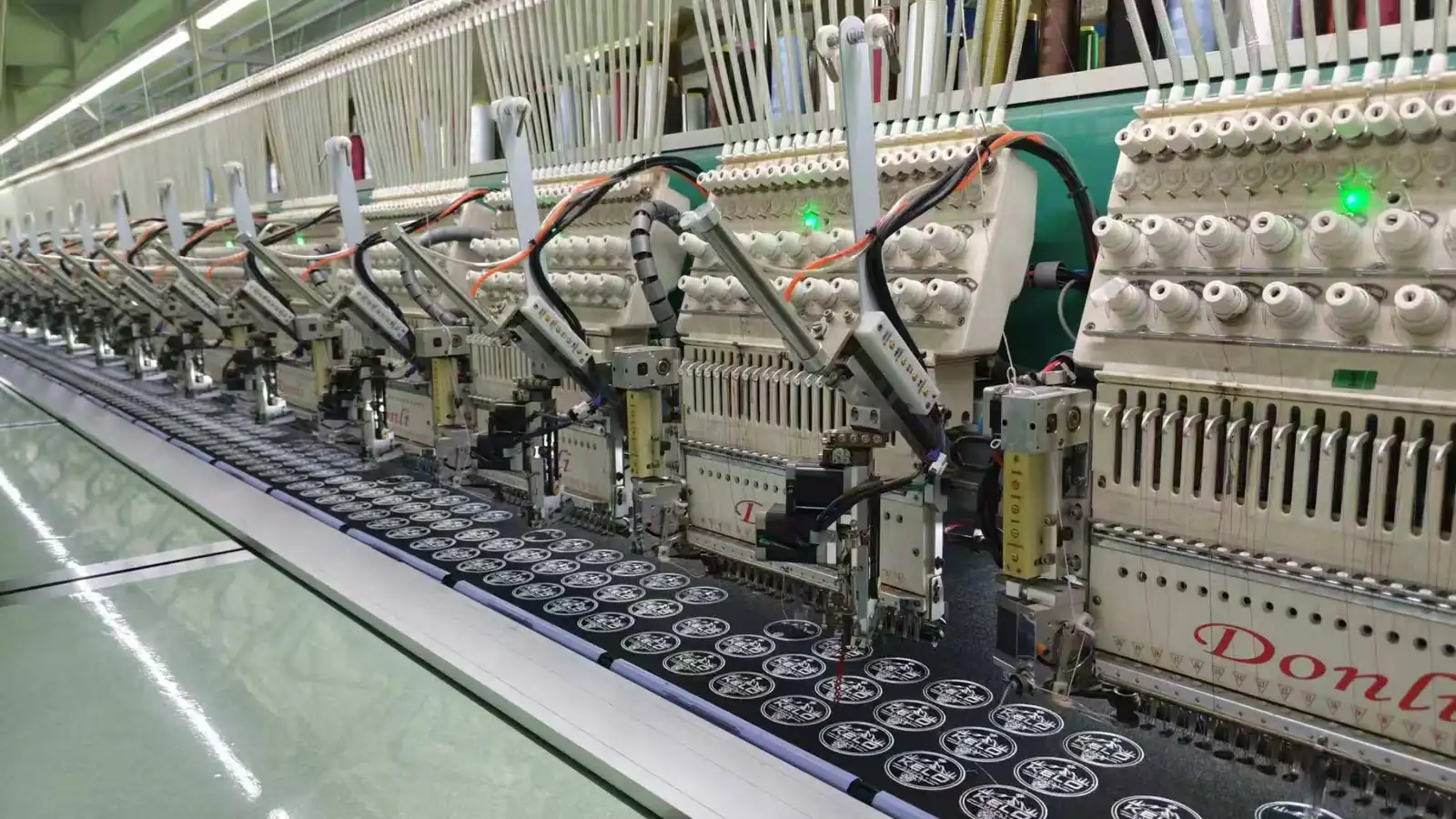
In computerized machine embroidery, a digitized design tells the equipment how to form the stitch sequence. People still prepare the design, select thread and support materials, frame the work, set up the machine, monitor production and inspect the result. Digitizing is a manufacturing task, not simply uploading an image and pressing start.
Machine embroidery also includes methods such as operator-guided free-motion work. When discussing a supplier's process, ask whether the design is stitched from a computer file, guided by an operator, worked by hand, or assembled through several methods. The word “machine” alone does not describe every production step.
For the wider range of emblem constructions, see the custom patch types and production overview.
| Buying question | Hand embroidery | Computerized machine embroidery |
|---|---|---|
| What creates the value? | Maker involvement, technique, individual treatment or a particular finish | A planned stitch construction that can be reproduced across an order |
| What drives the work? | Manual stitching and handling for each piece | Digitizing and setup, then stitching, handling, finishing and inspection |
| How are repeats managed? | Skilled makers work to an agreed reference and acceptable variation | A controlled file, materials and machine setup support consistency |
| What happens when the design changes? | The maker may adjust the approach, but changes can still require reworking | The file and sample may need revision, particularly for size or material changes |
| What should the buyer approve? | The finish, hand-worked scope, variation limits and actual product | The stitch-out, specification, placement and production reference |
Why Machine Embroidery Often Fits Commercial Repeat Orders
Brands usually need more than an attractive first piece. The next batch must meet the agreed reference for logo readability, dimensions, colors, placement and finish. Computerized embroidery provides a repeatable design file that can be developed into a controlled production specification.
Suitable multi-head equipment can stitch repeated units in parallel. This helps make repeated patches, uniform emblems and garment decoration commercially practical, although it does not establish a universal output rate or delivery date. Design complexity, material handling, finishing and available capacity still matter.
The initial development work also changes the cost comparison. Digitizing and setup are shared across an order, while each piece still requires production and handling. A small machine-embroidered order can therefore have a relatively high unit price, especially with an intricate design or demanding finish. Repeating an approved design may spread that initial work across more pieces.
This is a reason to consider machine embroidery for a repeatable product program, not proof that it is always the cheapest choice. Ask for a quotation based on the actual design, size, quantity, materials and finishing. An unusually complex machine-embroidered piece and a simple hand-worked motif should not be compared as if they require the same work.
For a brand logo, begin with the embroidery artwork preparation guide so the supplier can review the design at its intended finished size.
When Hand Embroidery Can Be a Commercial Choice
Handwork can be appropriate when the product is sold for its craftsmanship, artistic treatment or labor-intensive detail. Examples include bespoke garments, bridal and occasionwear, small designer collections, commissioned accessories and commemorative pieces. These can be genuine commercial products rather than hobby projects. For example, le19M describes Lesage's embroidery for couture, ready-to-wear and accessories, including needle and Lunéville-hook work.
The business question is whether the selling price, order size and schedule support the required work. A buyer paying for a maker's interpretation may accept controlled differences between pieces. A uniform program requiring an identical logo across many locations may place a higher value on repeatability.
Hand embroidery does not automatically mean that only one piece can be made. Skilled teams can produce a series, but labor planning, training and the reference standard become important. Define what variation is acceptable in shape, stitch treatment or surface effect. Keep spelling, agreed dimensions, placement and attachment requirements clear even when individual character is part of the design.
Conversely, a machine-embroidered product can be developed with considerable design and technical skill. “Hand” and “machine” describe how work is carried out; they are not complete quality grades.
A Hybrid Route: Machine Embroidery with Hand Finishing
A product does not always need a single method. A repeatable embroidered base can be produced by machine, then receive hand-applied beads, petals, trims or selected stitched details. This can concentrate manual work where it contributes visibly to the design.
Be specific about that division. Hand-attached decorative elements are not the same process as stitching the entire design by hand. Likewise, manual trimming, packing or sewing a machine-made patch onto a garment does not turn the patch's embroidery into hand embroidery.
For a combined construction, ask the supplier to record:
- which parts are machine embroidered and which are worked or attached by hand;
- when manual work occurs relative to sewing and assembly;
- the reference appearance and acceptable variation;
- how added elements are secured and inspected;
- the care requirements and what happens if a material or component changes.
A hybrid route still requires sampling and labor capacity. It should not be presented as a guaranteed shortcut to a handmade appearance at a machine-only price.
Can You Identify the Method from a Photograph?
A close-up can show stitch direction, texture, edge treatment and visible construction, but it rarely proves the complete production method. Lighting changes thread sheen, photographs hide the reverse, and different materials can create similar surface effects.
Avoid simple identification rules such as “hand embroidery uses silk, while machine embroidery uses nylon.” Thread composition is a separate specification. Handworkers can use cotton and other fibers, while machine embroidery can use several thread types selected for appearance and use. A glossy surface or a particular color transition does not establish how a piece was made.
Machine digitizing can vary stitch direction, length and color layering. Skilled hand embroidery can also be regular and consistent. Those visible qualities may help a discussion, but should not be used alone to certify a handmade claim.
For a purchase where the method is part of the value, request a clear process description, material specification and appropriate work-in-progress evidence. For combined work, identify the manual steps accurately in the product description. The supplier's production record and agreed specification are more useful than a comparison photograph with unrelated designs.
Quality and Care Still Need a Product Specification
Neither method guarantees softness, strength, fine detail or washability. The thread, ground fabric, stitch construction, support, finishing and intended use all influence the result. Raised hand-applied details may introduce different care and snagging concerns from a flat stitched logo, while a poorly developed machine design can distort fabric or lose small details.
For patches, also separate the embroidery process from the attachment. A machine-made patch can be sewn on, heat applied with compatible backing, or fitted with a properly specified hook-and-loop system. Hand embroidery does not decide the backing choice by itself. Review the patch backing selection guide when comparing how the finished emblem will be used.
Approve the actual product rather than only a digital rendering or loose decorative sample. Check appearance, dimensions, readable detail, placement, hand feel, reverse finishing and any added components. Agree on care and relevant use checks before production instead of assuming a handmade or machine-made label establishes performance.
Compare Three Production Routes Before Ordering
If the choice is uncertain, request alternatives against one product brief. Keep the intended finished size, use, appearance requirements, quantity and receiving deadline clear; record any design adaptations proposed for a different method.
| Route | Ask the supplier to explain | Useful decision |
|---|---|---|
| Computerized embroidery | Digitizing, sample approval, repeat specification and finishing | Can it deliver the required appearance consistently within the order budget? |
| Hand embroidery | Manual scope, maker/team capacity, variation reference and care | Is the hand-worked contribution central to what customers will pay for? |
| Machine base with hand finishing | The boundary between processes, added labor and component security | Does selective handwork add enough value to justify the extra steps? |
Compare total development, production, finishing and delivery on the same basis. Request an actual schedule for approval, production and shipment; do not turn a machine's advertised sewing speed into a promised order lead time. If repeatability is important, review a representative production trial rather than relying only on the best single sample.
Keep the accepted sample and specification together. For machine work, this includes the approved file revision and material references. For hand or combined work, also record the permitted variation and manual finishing details. Changes to size, ground material or decoration can require another sample.
A Practical Starting Point for Apparel Brands
For repeatable patch designs, uniforms and planned garment quantities, start by evaluating computerized machine embroidery. Consider hand embroidery when a particular craft process or individual finish is part of the product's value and the budget and schedule support it. Choose a combined route when a machine-made base and clearly defined manual detail serve the brief better together.
Send the artwork, finished dimensions, quantity per design, target fabric or garment, placement, desired surface effect, care expectations and required receipt date. Explain whether the customer needs close repeatability or is buying controlled hand-worked variation. The B2B quotation checklist helps organize those inputs.
For a YQX custom embroidered patch project, share the brief through the project contact page. Ask the team to review the design and confirm the suitable process, finishing scope and sample requirements before placing the production order.
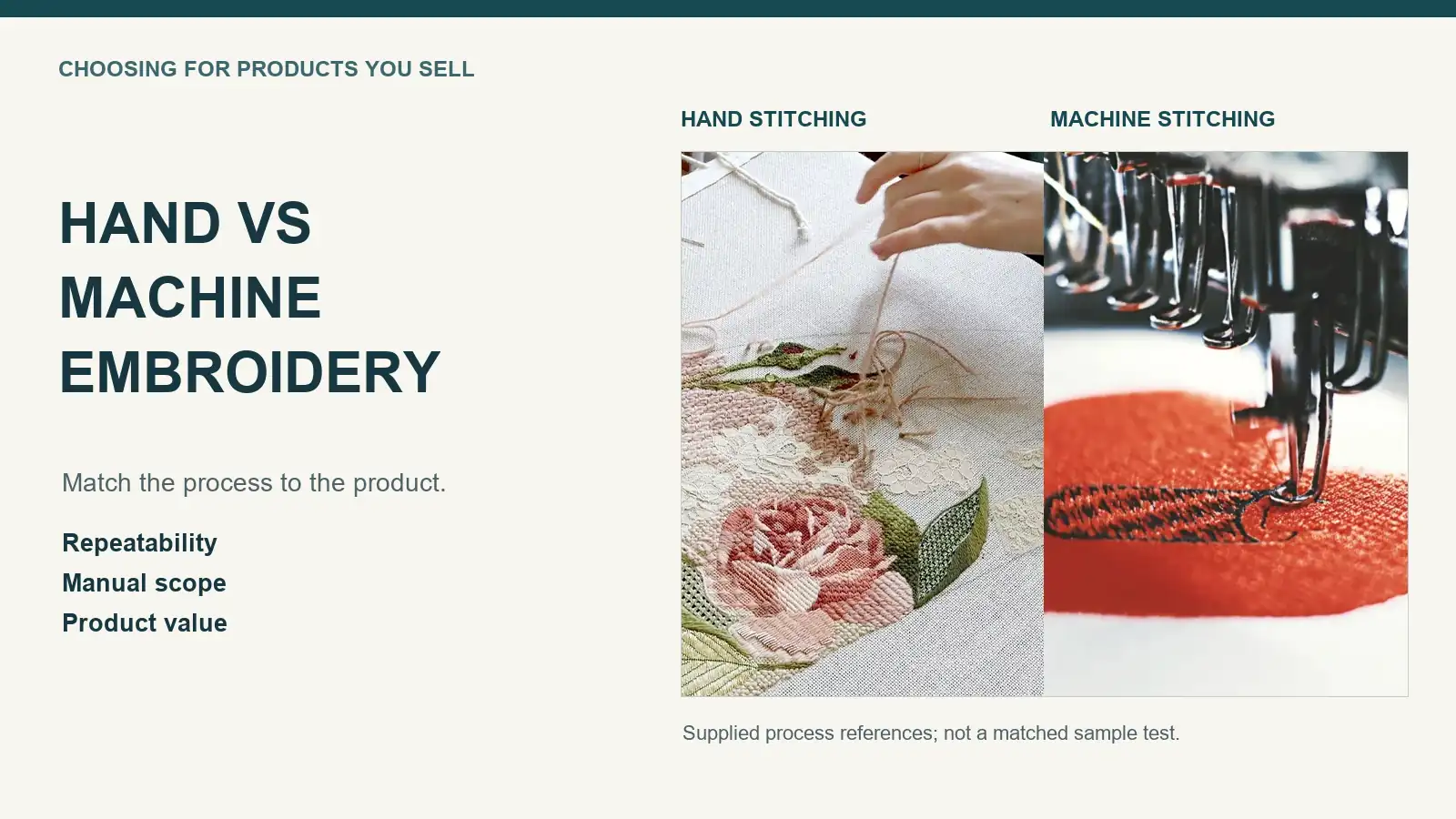
Cover illustration note: Editorial cover using a supplied process comparison photo. The different designs and views are not a matched quality, labor or cost test.