Custom patches are used on everything from work uniforms and jackets to bags, hats, sportswear, and branded merchandise.
But if you are ordering patches for the first time, choosing the right type can be confusing. Should your design be embroidered or woven? Is chenille suitable for small lettering? What is the difference between a patch and direct embroidery? And does an iron-on patch refer to the decoration method or simply the backing?
The right answer depends on your artwork, finished size, application, and the look you want to achieve.
This guide explains the basics of custom patches, how they developed, the most common production methods, and how to choose a practical option for your project.
What Is a Patch?
A patch is a separate decorative or identification component that can be attached to a garment, bag, uniform, hat, or other product.
A patch may contain a company logo, team name, artwork, lettering, identification information, or decorative graphics.
Unlike direct embroidery, where the design is stitched directly onto the final garment or fabric panel, a patch is normally produced separately and attached afterward.
A custom patch usually involves several decisions:
- Artwork: the logo, lettering, illustration, or graphic you want to reproduce.
- Base material: the fabric or material that forms the patch.
- Decoration method: embroidery, weaving, printing, chenille, or another technique.
- Border or edge: how the outside edge of the patch is finished.
- Backing or attachment method: how the patch will be fixed to the final product.
These terms are easy to mix up.
For example, embroidered describes how the design is produced, while iron-on describes how the finished patch is attached.
An embroidered patch can therefore have an iron-on backing, sew-on construction, hook-and-loop backing, or another attachment system.
Understanding this difference makes it much easier to compare patch options correctly.
A Short History of Patches
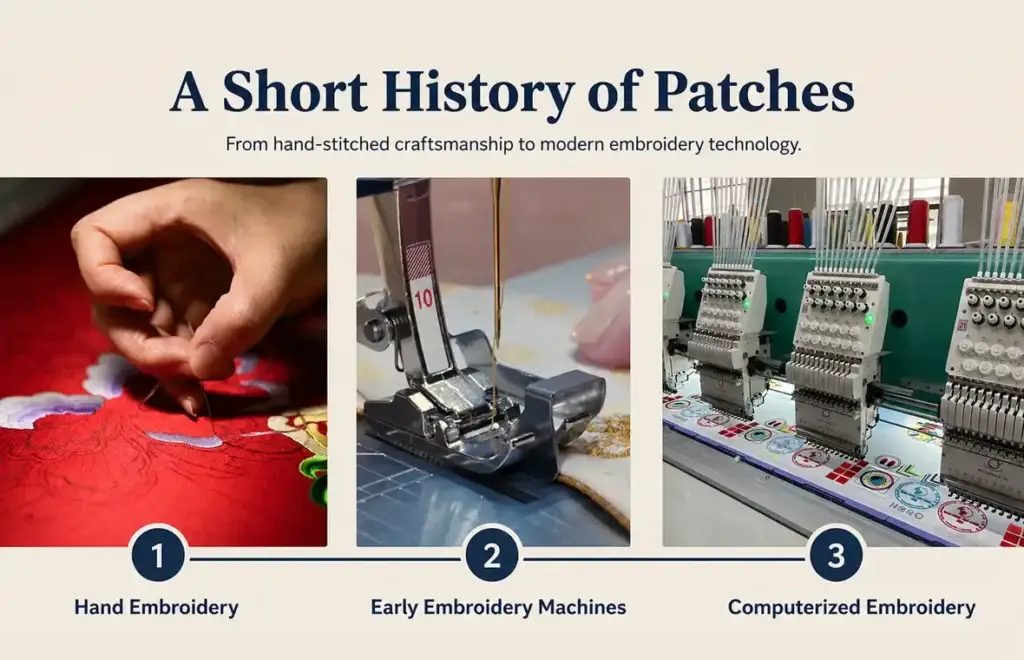
Decorative embroidery existed long before the modern patch.
For centuries, embroidery was completed by hand and was used to decorate clothing, communicate status, display symbols, and identify groups or organizations.
Because hand embroidery required considerable time and skill, embroidered decoration was once much more labor-intensive than it is today.
As embroidery machinery developed, stitched emblems became easier to reproduce. This made embroidered identification more practical for uniforms, organizations, businesses, military units, clubs, and other groups.
Patches became especially useful because the emblem could be produced separately and then applied to the final garment.
Later, automated and computerized embroidery changed production again.
Instead of manually recreating each design, artwork can now be converted into embroidery instructions and reproduced by computerized machines. Multi-head embroidery equipment also allows several pieces to be produced during the same production cycle.
This development helped make embroidered patches practical not only for identification but also for fashion, sportswear, merchandise, accessories, and large commercial orders.
Today, patches are both functional and decorative products.
They can identify an employee or organization, represent a brand, commemorate an event, decorate a fashion product, or simply add texture and visual interest to a design.
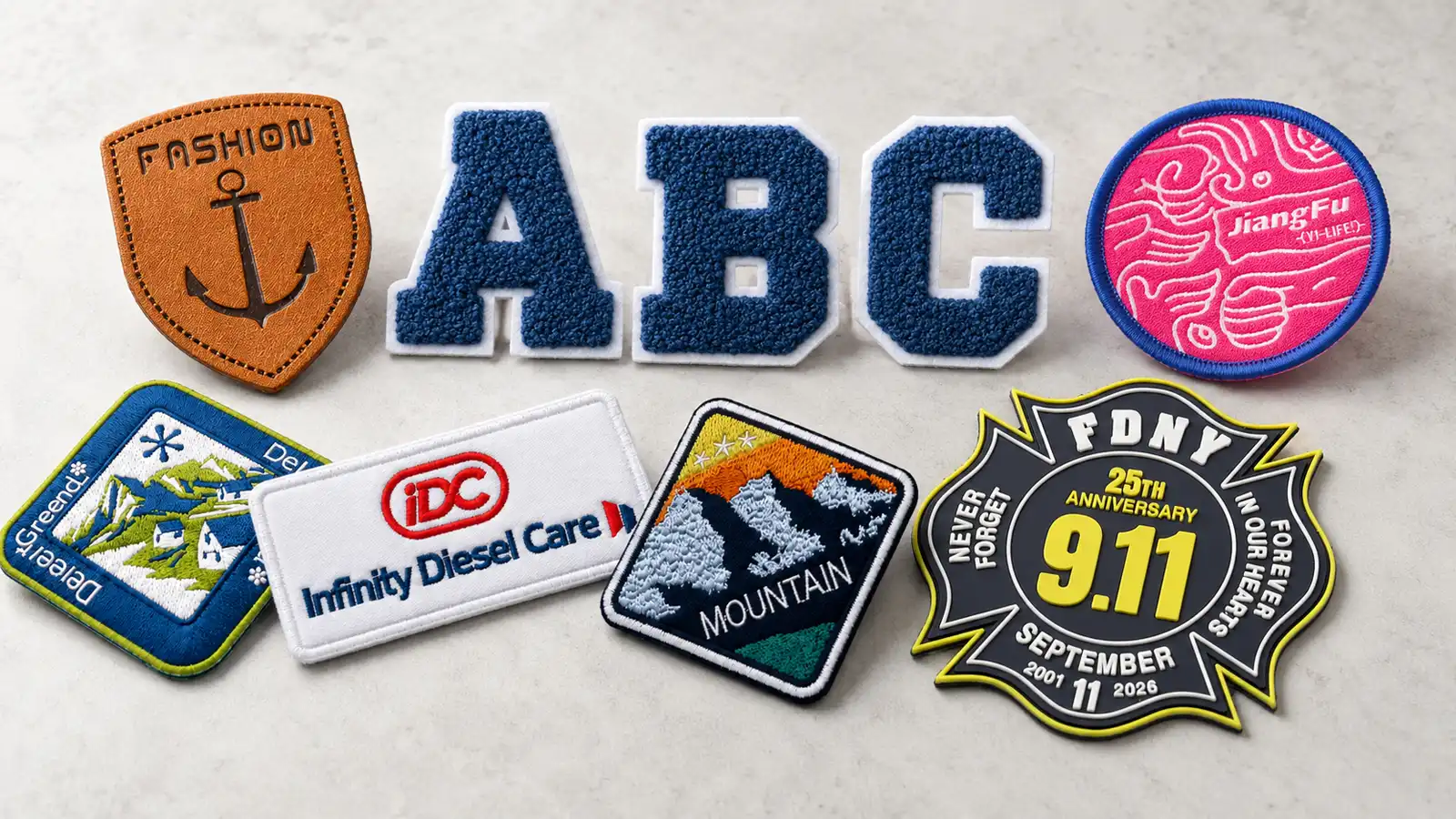
What Are the Most Common Types of Custom Patches?
There is no single patch type that is best for every design.
Different production methods create different levels of texture, detail, thickness, and visual appearance.
For buyers, the most important question is not:
“Which patch is the best?”
It is:
“Which patch construction is most suitable for my artwork and application?”
Here are several common options.
Embroidered Patches
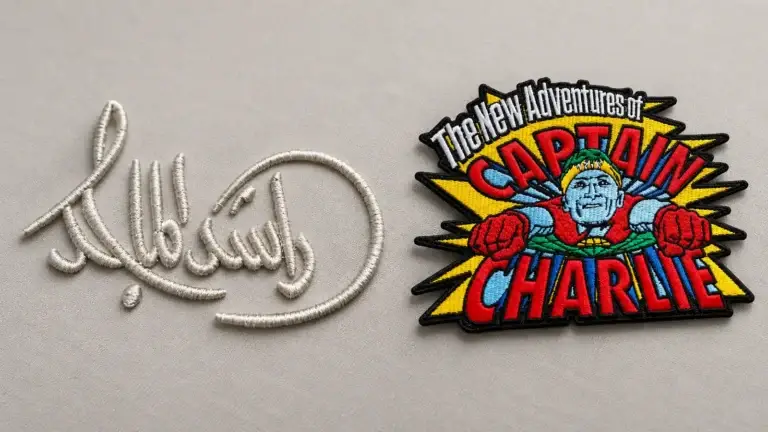
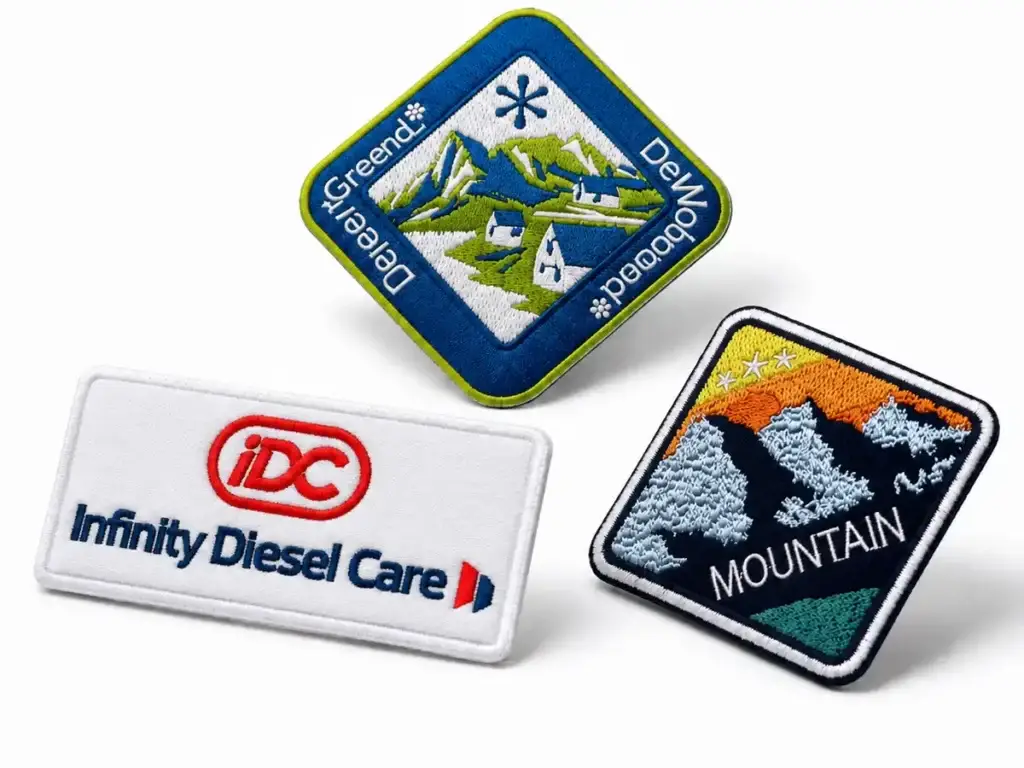
Embroidered patches are one of the most recognizable types of custom patches.
The design is created by stitching embroidery thread onto a fabric base. Depending on the design, some of the base material may remain visible or the surface may be covered more extensively with embroidery.
The stitched surface gives the patch a clear textile texture that cannot be reproduced in exactly the same way by printing.
Embroidered patches are commonly suitable for:
- Company logos
- Uniform emblems
- Brand patches
- Workwear
- Jackets
- Bags
- Hats and headwear
- Sports and club patches
- Merchandise
They work especially well when the artwork contains bold lettering, clear shapes, defined outlines, and areas that can be translated into stitches.
However, embroidery has physical limitations.
Thread has thickness. Very small lettering, extremely thin lines, tiny gaps, complicated gradients, and photographic details may not remain as clear after being converted into stitches.
This does not necessarily mean that a complicated design cannot be made.
Sometimes increasing the patch size, simplifying small details, adjusting the stitch structure, or using a different production method can produce a better result.
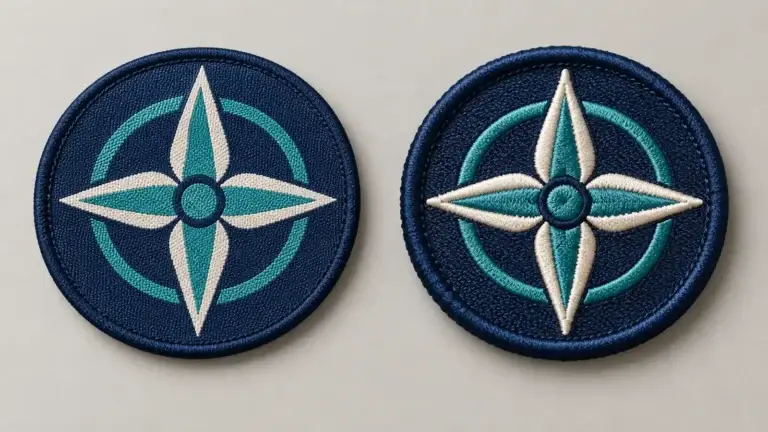
Woven Patches
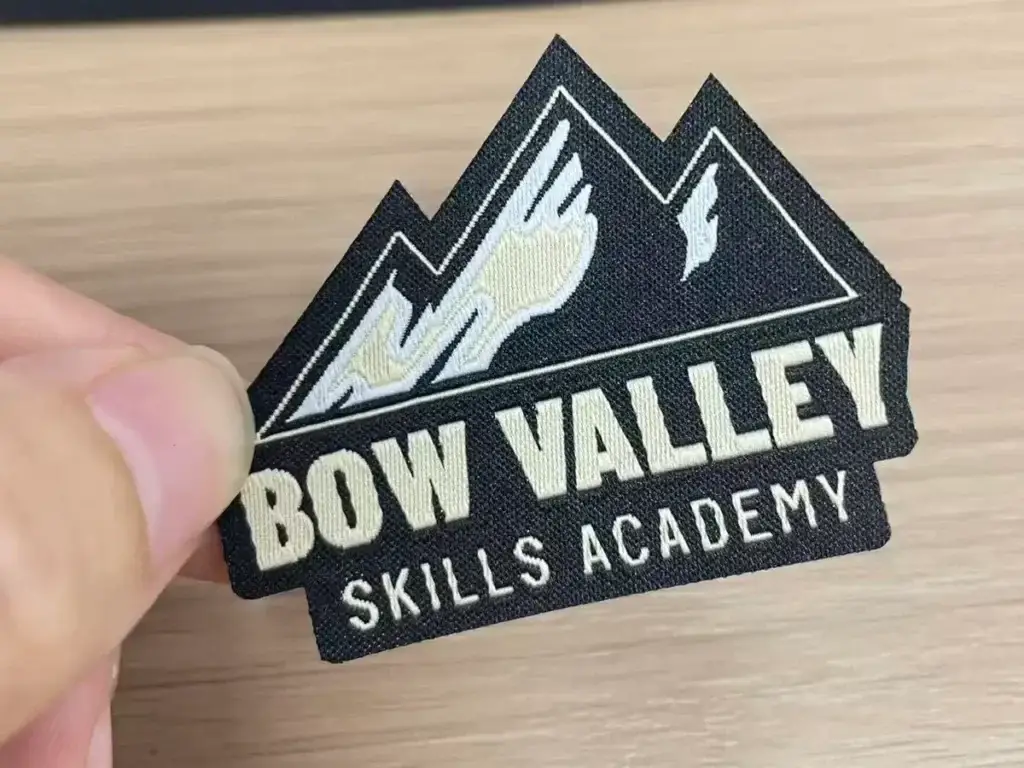
Woven patches also use thread, but their construction is different from traditional embroidery.
Finer threads are woven together to create the design, producing a flatter and smoother surface.
Because the woven structure can reproduce smaller visual elements, woven patches are often considered when artwork contains:
- Small lettering
- Thin lines
- Detailed logos
- Fine graphic elements
- Designs that need a flatter surface
A woven patch does not have the same raised stitched texture as a traditional embroidered patch.
This is the main trade-off.
If the buyer wants the obvious texture and depth associated with embroidery, an embroidered patch may be preferable. If preserving fine details is more important, a woven construction may make more sense.
Chenille Patches
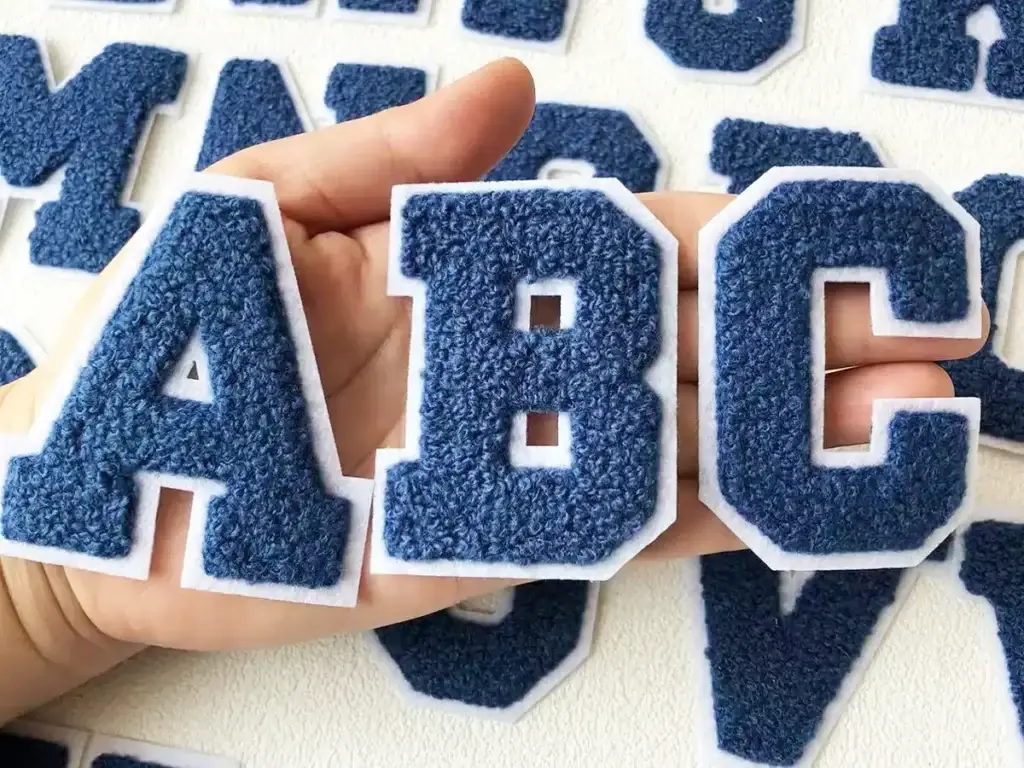
Chenille patches are known for their soft, raised, fuzzy surface.
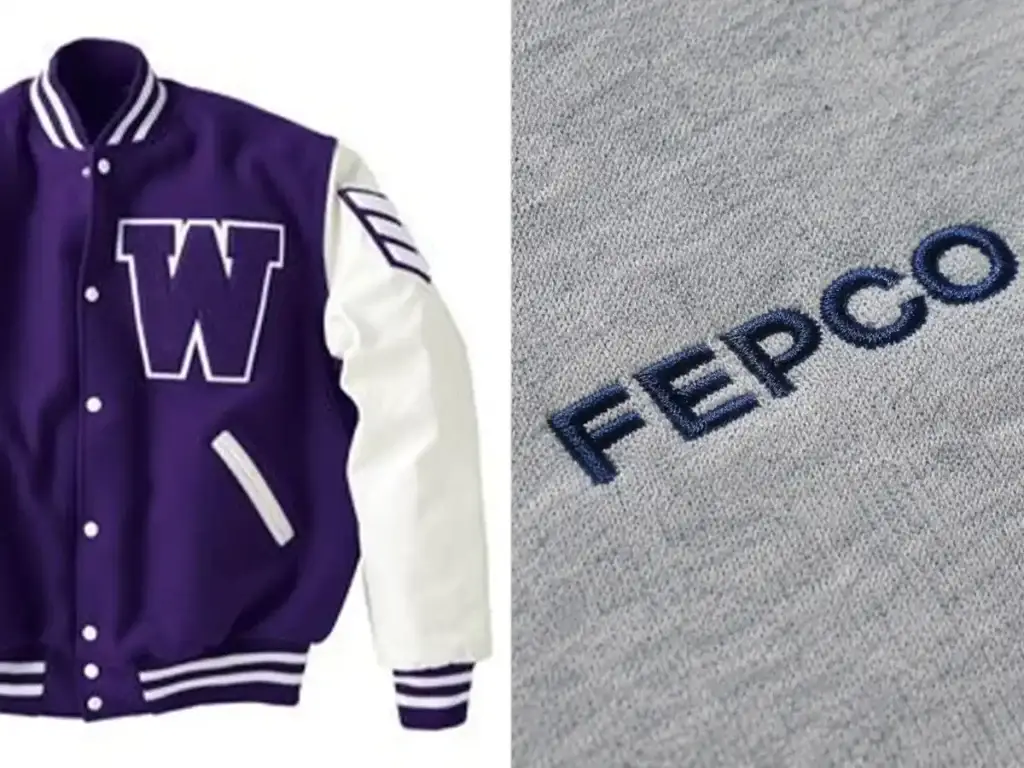
They are strongly associated with varsity jackets, school lettering, sportswear, retro fashion, and large decorative graphics.
Chenille works particularly well for:
- Large letters
- Numbers
- Bold shapes
- Simple logos
- Varsity-style designs
- Designs where texture is more important than fine detail
The main limitation is detail.
Chenille yarn is much thicker than standard embroidery thread, so very small lettering, narrow lines, or complicated artwork may lose definition.
For some designs, chenille can be combined with standard embroidery. Chenille creates the large textured areas while embroidery handles smaller details.
This can be more practical than trying to produce an entire detailed design in chenille.
Printed and Sublimated Patches
Printed or sublimated patches reproduce artwork using color printing rather than relying entirely on individual embroidery stitches.
They can be useful for artwork containing:
- Gradients
- Many colors
- Very fine visual details
- Complex illustrations
- Photographic elements
This is important because embroidery is not printing.
A smooth digital gradient on a computer screen cannot always be reproduced exactly by changing embroidery thread from one color to another.
Embroidery can create blended or transitional effects using different thread colors and stitch techniques, but the final appearance will still have a stitched structure.
When an exact photographic or smooth gradient effect is more important than embroidery texture, a printed method may be more appropriate.
PVC, Leather, and Other Patch Materials
Custom patches are not limited to textile embroidery.
Other options in the market include PVC, leather, faux leather, silicone-like materials, and various mixed techniques.
For example, PVC patches are commonly considered when buyers want a rubber-like surface or a style suited to certain outdoor applications. Leather patches are often used when a brand wants a different material appearance on apparel, denim, hats, or accessories.
These products have their own advantages and limitations.
The important point is that patch type should follow the project requirements rather than simply following a trend.
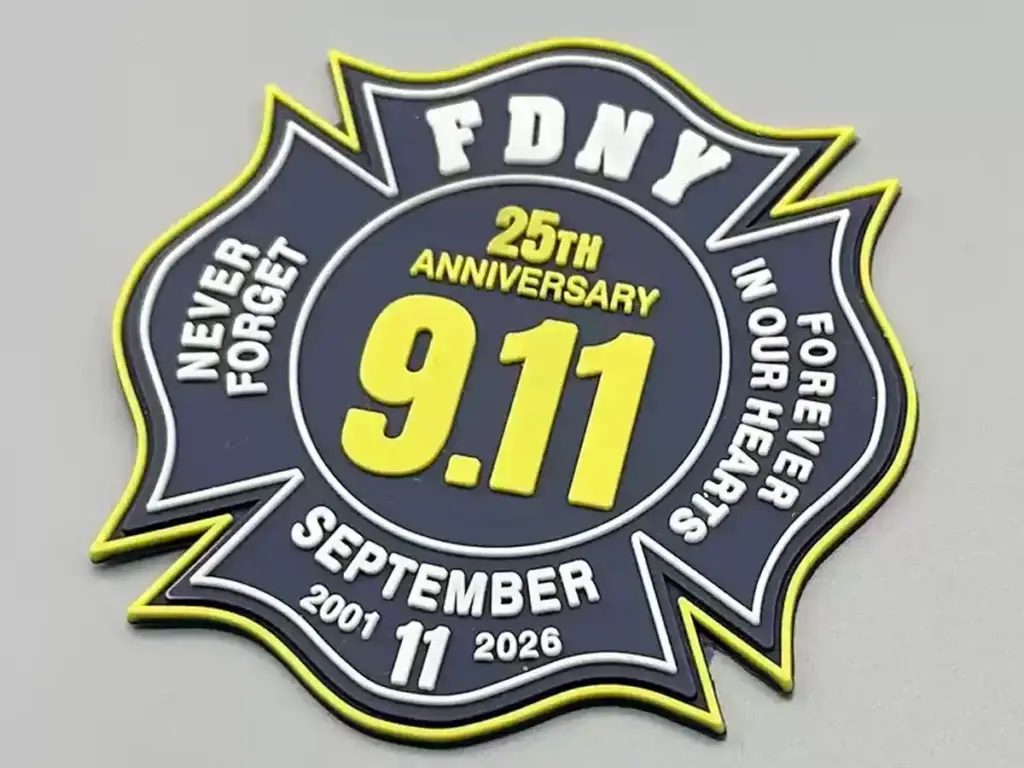
Embroidered vs. Woven vs. Chenille vs. Printed: Which Should You Choose?
A simple way to begin is to look at your artwork.
| If Your Design Has… | Usually Consider… |
|---|---|
| Bold logo and visible stitched texture | Embroidered patch |
| Small text or very fine lines | Woven patch |
| Large varsity letters or bold shapes | Chenille patch |
| Gradients or photographic detail | Printed or sublimated patch |
| A rubber-like outdoor appearance | PVC patch |
This table is only a starting point.
Finished size can completely change the recommendation.
A logo that is difficult to embroider clearly at 40 mm may work well at 80 mm. Likewise, a design that looks simple on a computer screen may contain small gaps or thin lines that are difficult to reproduce with thread.
For this reason, artwork should normally be reviewed together with the intended finished size.
[Image Placeholder: Artwork suitability comparison — show one bold logo, one logo with tiny lettering, one varsity letter, and one gradient artwork. Under each design, show the corresponding embroidered, woven, chenille, or printed patch example.]
Computerized Embroidery vs. Hand Embroidery
Both hand embroidery and computerized embroidery use thread to create a design, but they serve very different purposes.
Hand Embroidery
Hand embroidery is created manually by an embroiderer using needle and thread.
It is often valued for its handcrafted character.
Because the stitching is completed individually, small variations between pieces are normal and may even be part of the desired appearance.
Hand embroidery can be a good choice for:
- Artistic projects
- Handcrafted products
- One-of-a-kind pieces
- Decorative work where individual variation is acceptable
However, manually reproducing the same design many times requires substantial labor.
That makes hand embroidery less practical for many commercial patch orders.
Computerized Embroidery
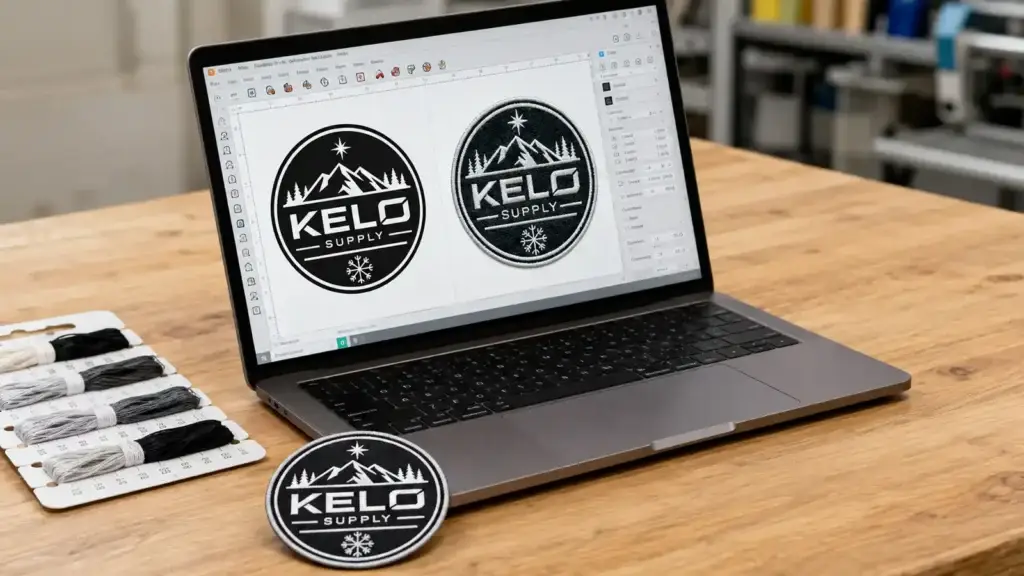
Computerized embroidery begins with artwork, but the artwork cannot simply be sent directly to an embroidery machine.
First, the design is converted into an embroidery file through a process often called digitizing.
The embroidery file defines information such as:
- Stitch types
- Stitch direction
- Stitch sequence
- Thread changes
- Density
- Underlay
- Other machine instructions
Once the embroidery program is prepared and tested, computerized equipment can reproduce the same stitch structure across multiple pieces.
For B2B production, this provides several important advantages:
- Better repeatability
- Faster production
- More consistent stitch placement
- Easier reproduction for repeat orders
- More practical scaling from samples to bulk production
This does not mean computerized embroidery is automatically “better” than hand embroidery.
They solve different problems.
Hand embroidery focuses more on individual craftsmanship.
Computerized embroidery is usually more practical when a brand, garment factory, uniform supplier, or sourcing company needs the same design produced repeatedly according to approved specifications.
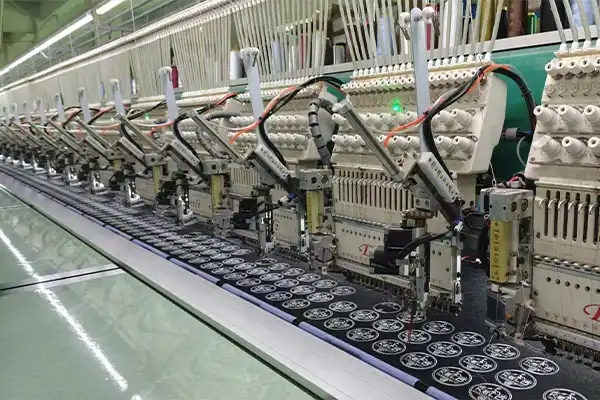
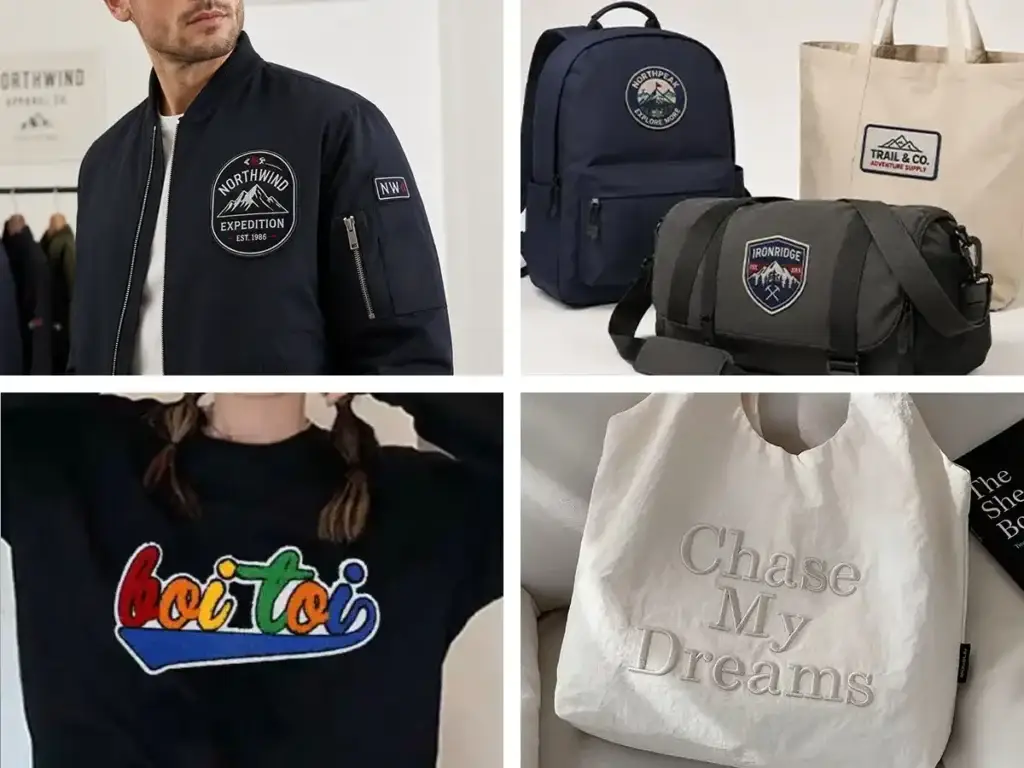
Where Are Custom Patches Used?
Custom patches are used across a wide range of products and industries.
Apparel and Fashion
Patches can be applied to:
- Jackets
- Shirts
- Denim
- Outerwear
- Streetwear
- Fashion collections
A patch can function as a brand logo, decorative element, collection detail, or removable design component.
Uniforms and Workwear
Uniform patches are commonly used for:
- Company identification
- Departments
- Job roles
- Names
- Organizations
- Teams
Because patches can be manufactured separately, they can also simplify certain uniform programs where the same emblem needs to be applied to different garments.
Bags and Accessories
Patches are also commonly used on:
- Backpacks
- Tote bags
- Handbags
- Fabric accessories
- Equipment bags
The patch construction should be considered together with the material and shape of the final product.
Hats and Headwear
Embroidered patches are frequently used on caps and other headwear.
However, curved surfaces and small application areas can affect the practical patch size and construction.
Sports, Clubs, and Organizations
Teams, schools, clubs, associations, and organizations use patches for:
- Membership
- Team identity
- Achievements
- Events
- Commemorative designs
Merchandise and Events
Brands and event organizers may also use patches as standalone merchandise or as part of promotional textile products.
Patch or Direct Embroidery: Which Should You Choose?
Some projects do not actually require a patch.
Sometimes direct embroidery is the better option.
The difference is simple:
A patch is produced separately and attached later. Direct embroidery is stitched directly onto the garment, fabric panel, or product component.
A patch may be more practical when:
- You want to produce logo components separately.
- The same logo will be used on different products.
- Patches need to be kept as inventory.
- The patch needs to be removable or replaceable.
- Garment production and patch production are handled separately.
- The patch itself is part of the desired visual style.
Direct embroidery may be more practical when:
- The design should appear integrated into the garment.
- The decoration will remain permanently in one position.
- Garment panels or finished products can be supplied for embroidery.
- You do not need the visual border or separate structure of a patch.
Neither method is universally better.
The correct choice depends on how your product is manufactured and how the decoration needs to be applied.
How Are Patches Attached?
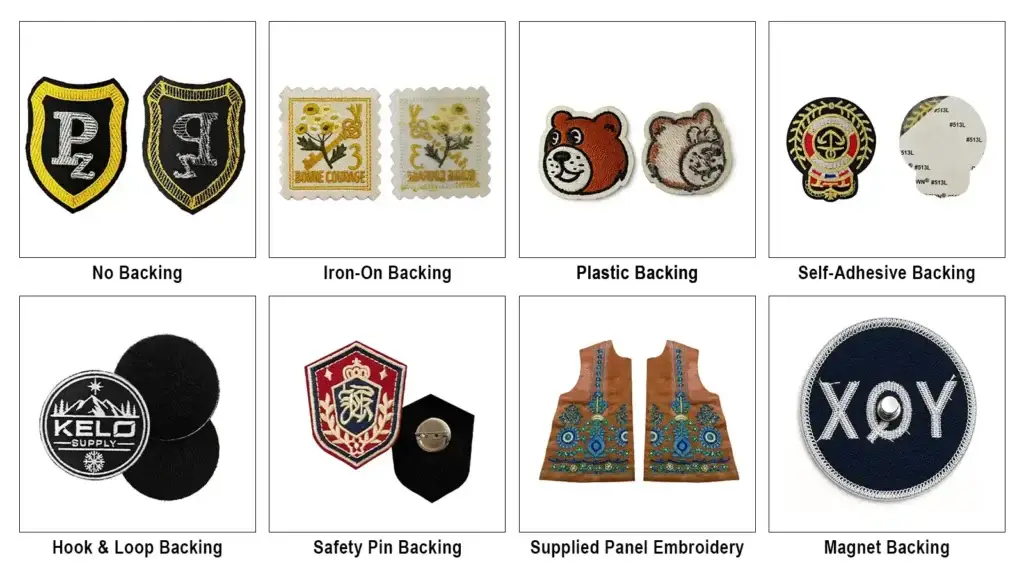
The backing or attachment method is another separate decision.
You should choose it based on the final product, fabric, washing requirements, and whether the patch needs to be permanent or removable.
Sew-On / No Backing
The patch is sewn directly onto the final product.
This is a straightforward option for garments, uniforms, bags, and many textile applications where permanent attachment is required.
Iron-On Backing
Iron-on patches use a heat-activated adhesive layer.
They can be applied using suitable heat and pressure.
However, not every fabric should be exposed to the same temperature. Heat-sensitive materials should be tested before application.
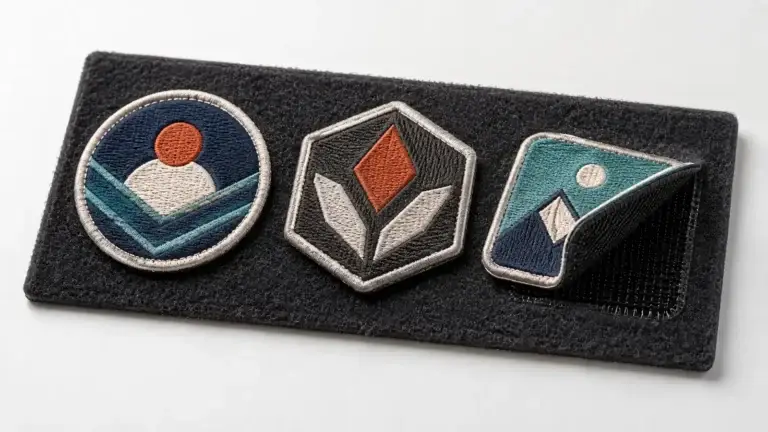
Hook-and-Loop
Hook-and-loop backing is useful when patches need to be removed or replaced.
It is commonly considered for uniforms, equipment bags, tactical-style products, and other applications where interchangeable patches are useful.
Self-Adhesive Backing
Self-adhesive backing works more like a peel-and-stick system.
It can be useful for temporary positioning, samples, display purposes, or lighter applications.
It should not automatically be treated as a replacement for permanent sewing or heat application.
Pin and Other Removable Attachments
Pins, magnets, and other attachment systems can also be used when the patch needs to remain removable.
For a more detailed comparison, see our guide to choosing the right patch backing.
How to Choose the Right Patch for Your Project
If you are still unsure which patch construction to choose, start with five questions.
1. How Detailed Is Your Artwork?
Check whether your artwork contains:
- Tiny lettering
- Very thin lines
- Narrow gaps
- Small isolated elements
- Gradients
- Photographic details
The more detail you have, the more important finished size and production method become.
Do not assume that a clear vector file automatically means every element can be embroidered clearly.
Embroidery still has physical stitch and thread limitations.
2. What Finished Look Do You Want?
Ask what you want the customer to see and feel.
For example:
- Classic stitched texture: consider embroidery.
- Fine, smooth textile detail: consider woven.
- Soft raised varsity texture: consider chenille.
- Smooth gradients or photographic detail: consider printing or sublimation.
The desired appearance should be considered together with production feasibility.
3. Where Will the Patch Be Used?
A patch for a jacket and a patch for a small bag component may need different construction.
Tell the manufacturer whether the patch will be used on:
- Clothing
- Uniforms
- Bags
- Hats
- Accessories
- Equipment
- Merchandise
If possible, also provide the fabric or material.
4. How Will the Patch Be Attached?
Decide whether you need:
- Sewing
- Heat application
- Hook-and-loop
- Temporary adhesive
- Another removable attachment
If you do not know, tell the manufacturer how the product will be used instead of guessing.
5. Is This a Sample, Small Order, or Bulk Production Project?
For commercial projects, approving one good sample is only part of the job.
You also need to consider whether the approved specifications can be repeated during bulk production.
Important points may include:
- Finished size
- Thread colors
- Stitch appearance
- Border
- Backing
- Placement
- Overall consistency
For repeat orders, keeping an approved sample and confirmed production specifications can also reduce uncertainty.
What Should You Send a Patch Manufacturer?
You do not need to understand every embroidery term before requesting a quotation.
For an initial review, the most useful information normally includes:
- Your artwork or reference image
- Finished patch size
- Quantity
- Intended application
- Preferred patch type, if known
- Backing requirement, if known
- Color requirements
- Required delivery date
Vector artwork is useful, but a high-resolution image or clear reference can also help a manufacturer understand the project during the first review.
If you do not know which patch type or backing to choose, explain the final application.
For example:
“This logo will be used on a work jacket and needs to withstand regular wear.”
That information is often more useful than selecting a backing without knowing whether it suits the garment.
Frequently Asked Questions
Are All Custom Patches Embroidered?
No.
Embroidery is only one method.
Other patch constructions include woven, chenille, printed, sublimated, PVC, leather, and mixed-technique options.
Can Every Logo Be Made as an Embroidered Patch?
Not necessarily in its original form and size.
A logo with very small lettering, thin lines, gradients, or complicated details may require adjustment.
Possible solutions include increasing the patch size, simplifying certain details, changing stitch construction, or considering another production method.
Are Embroidered Patches Better Than Woven Patches?
Neither is automatically better.
Embroidered patches provide more visible stitch texture and dimension.
Woven patches provide a flatter surface and can generally handle finer details.
The better option depends on the artwork and desired appearance.
Is Computerized Embroidery the Same as Printing?
No.
Printing applies color to a surface.
Embroidery creates the design with physical thread and stitches.
Because of this, the two processes reproduce fine details, gradients, colors, and textures differently.
A printed image should therefore not be used as a guarantee of exactly how the same artwork will appear in embroidery.
Can the Same Patch Be Used on Clothing, Bags, and Hats?
Sometimes, but not always.
The final material, available application area, patch size, thickness, flexibility, and backing method should all be considered.
If one patch design will be used across several products, it is useful to tell the manufacturer before sampling.
Final Thoughts: Start With the Artwork and Application
There is no single best type of custom patch.
A successful patch starts with matching the production method to the design.
Before choosing a construction, consider:
Artwork + Finished Size + Desired Appearance + Application + Attachment Method
A simple logo may be ideal for embroidery.
A logo with very small lettering may benefit from a woven construction.
A large varsity design may suit chenille.
Artwork with photographic detail or smooth gradients may be better suited to printing.
And in some projects, direct embroidery may make more sense than producing a separate patch.
The goal is not to force every design into the same process.
The goal is to choose a construction that can reproduce the important parts of the design while remaining practical for the final product and production quantity.
Send Your Patch Design for Review
If you are preparing a custom embroidered patch or another embroidery project, send us your:
- Artwork
- Finished size
- Quantity
- Product application
- Backing requirement, if known
- Required delivery date
Our team can review the design, check whether the details are practical for embroidery, and discuss suitable construction before sampling and bulk production.