Requesting an embroidery quote does not need to be complicated.
For many buyers, the real problem is not the design itself. It is knowing what information to send to the factory at the beginning. When the information is clear, the factory can review the design faster, suggest the right production method, estimate cost more accurately, and identify possible sampling or bulk production risks earlier.
If some details are still not confirmed, that is completely fine. You can still contact us with what you already have. This checklist is simply here to help you prepare the most useful information before requesting a quote.
1. Artwork or Design File
The first thing to send is your artwork or design reference.
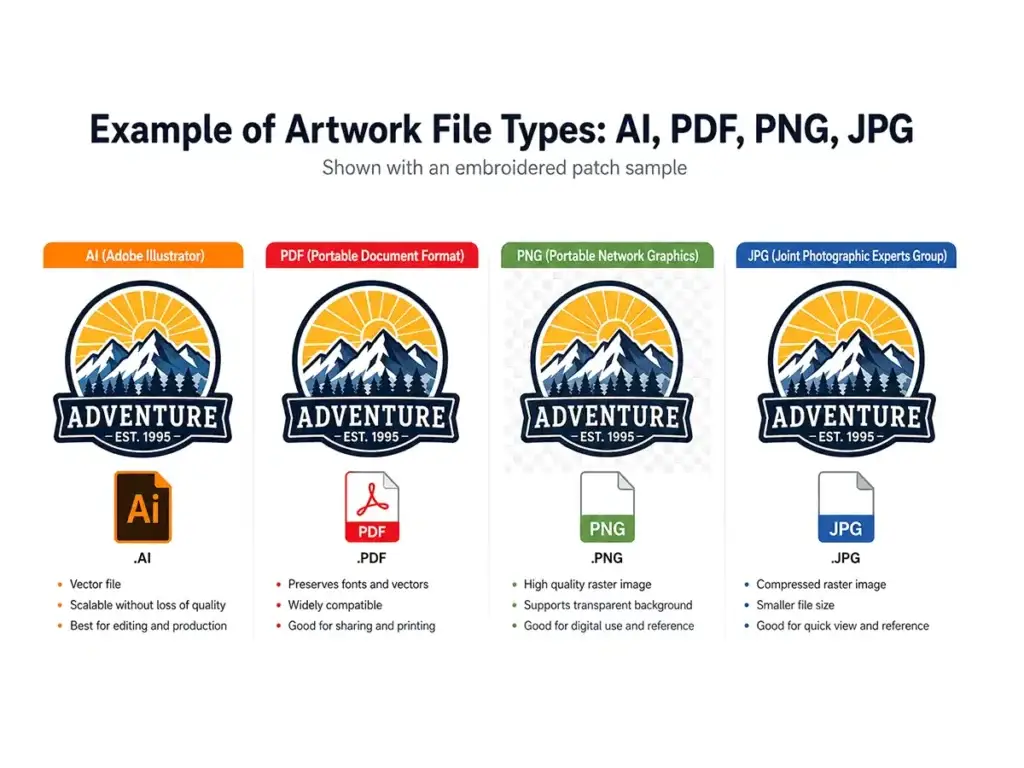
This can be a logo, brand graphic, patch artwork, sketch, previous sample photo, or even a rough design idea. If you have a professional file, you can send AI, PDF, PSD, EPS, SVG, JPG, or PNG formats. If you only have a clear image, that is also a good starting point.
The most important thing is that the design should be clear enough for review.
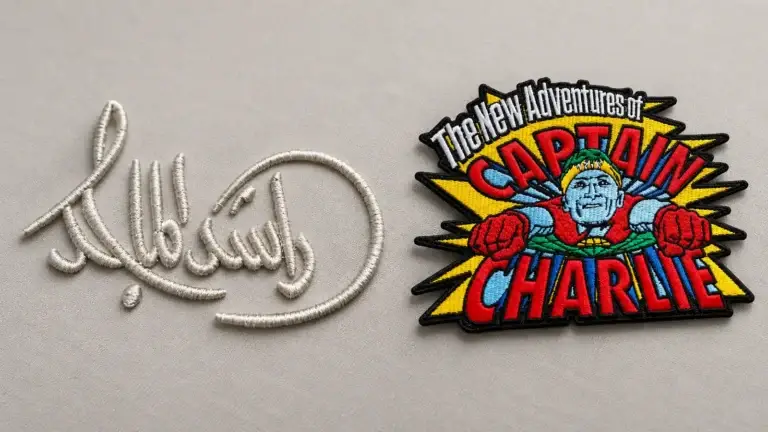
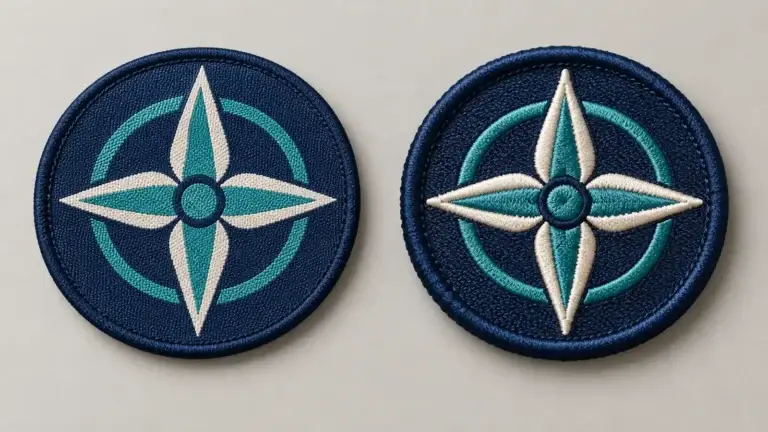
For embroidery, not every small detail can be stitched exactly as it appears on screen. Very thin lines, tiny letters, gradients, and complicated shadows may need to be simplified. A good embroidery factory will review the artwork and let you know what can be kept, what should be adjusted, and what may affect the final result.
Helpful files to send:
| File Type | Useful For |
|---|---|
| AI / PDF / EPS / SVG | Best for clear logo structure and scalable artwork |
| PSD | Useful when artwork has layers |
| JPG / PNG | Good for visual reference if the image is clear |
| Photo of sample | Useful for matching a previous patch or embroidery style |
| Sketch or concept | Good for early project discussion |
If you are not sure whether your artwork is suitable for embroidery, you can send it first. Our team can review the design before sampling and suggest practical adjustments.
2. Finished Size
The finished size is one of the most important details for an accurate quote.
Please tell the factory the width and height of the patch or embroidery area. You can use millimeters, centimeters, or inches. If the shape is irregular, provide the widest width and tallest height.
For example:
- 80 mm wide × 50 mm high
- 3 inches wide × 2 inches high
- 10 cm diameter
- 4 inches tall, width according to artwork proportion
Size affects cost, stitch density, detail clarity, border choice, and production time.
The same design may look very different at 30 mm and 100 mm. A small patch may not hold fine text or tiny details well. A larger patch can show more detail, but it may also require more stitches and more production time.
If you are not sure about the best size, send us the application area. For example, “left chest logo,” “cap front,” “sleeve patch,” or “bag label.” We can help suggest a practical size range.
3. Quantity Plan
Quantity is not only used for calculating price. It also affects production planning, material preparation, sampling, and lead time.
For B2B projects, it is helpful to separate your quantity plan into three parts:
| Quantity Type | Example |
| Sample quantity | 1–3 pcs for approval |
| First bulk order | 100 pcs, 500 pcs, 1,000 pcs, etc. |
| Repeat order possibility | Monthly, seasonal, or future reorder |
If this is a new design, you may only need a sample first. If this is for a garment production order, uniform project, brand launch, or sourcing program, the factory needs to understand the expected bulk quantity.
Larger quantities may require more production scheduling. Smaller quantities may have a higher unit cost because setup, digitizing, material preparation, and machine time still need to be arranged.
You do not need to know the exact repeat order quantity at the first stage. Even a rough estimate is useful.
For example:
“We need 100 pcs for the first order. If the quality is approved, we may reorder 1,000–3,000 pcs later.”
This helps the factory think beyond one sample and consider sample-to-bulk consistency from the beginning.
4. Application Area
Please tell the factory where the embroidery or patch will be used.
This is a detail many buyers forget, but it is very important.
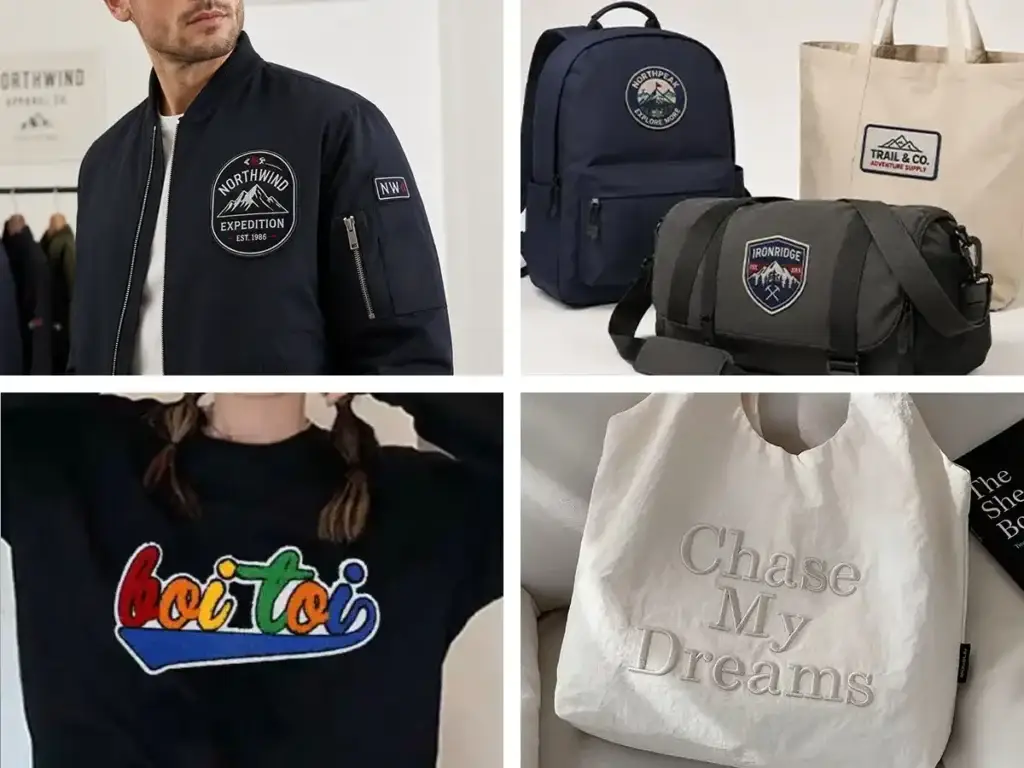
A patch for a cap is different from a patch for a jacket. A bag label is different from a sleeve badge. Embroidery directly on a garment panel is different from a separate patch that will be sewn later.
Common application areas include:
- Garment
- Cap or hat
- Bag
- Sleeve
- Chest
- Uniform
- Label
- Panel
- Accessory part
- Handbag component
- Decorative appliqué
Application area affects backing, thickness, edge finishing, flexibility, durability, and even the recommended size.
For example, a thick patch may work well on a jacket but may feel too heavy on thin fabric. An iron-on backing may be convenient for some garments, but sew-on may be better for long-term durability or heavy-use products. A cap patch may need a different shape and structure to sit well on the curved front panel.
If you can send a photo of where the patch will be applied, that is even better.
5. Base Material or Fabric
If the embroidery will be applied to fabric, or if the patch will be sewn onto a product, it is helpful to tell us the base material.
Common materials include:
- Cotton
- Denim
- Canvas
- Nylon
- Polyester
- Felt
- Twill
- Leather-like material
- Wool-blend fabric
- Outdoor fabric
- Supplied garment panel
Different materials behave differently during embroidery and application.
Soft fabric may need more stability. Stretch fabric may need careful stitch control. Thick canvas or denim may handle stronger embroidery well. Nylon or coated fabric may require extra attention if heat application is involved.
The base material can affect:
- Stitch stability
- Edge quality
- Patch thickness
- Adhesion method
- Final hand feel
- Durability after use or washing
If you do not know the exact fabric name, just send a photo or describe the product. For example, “heavy cotton jacket,” “nylon backpack,” or “denim cap.” That is enough for an early review.
6. Backing and Attachment Requirement
Backing means how the patch will be attached or finished on the back.
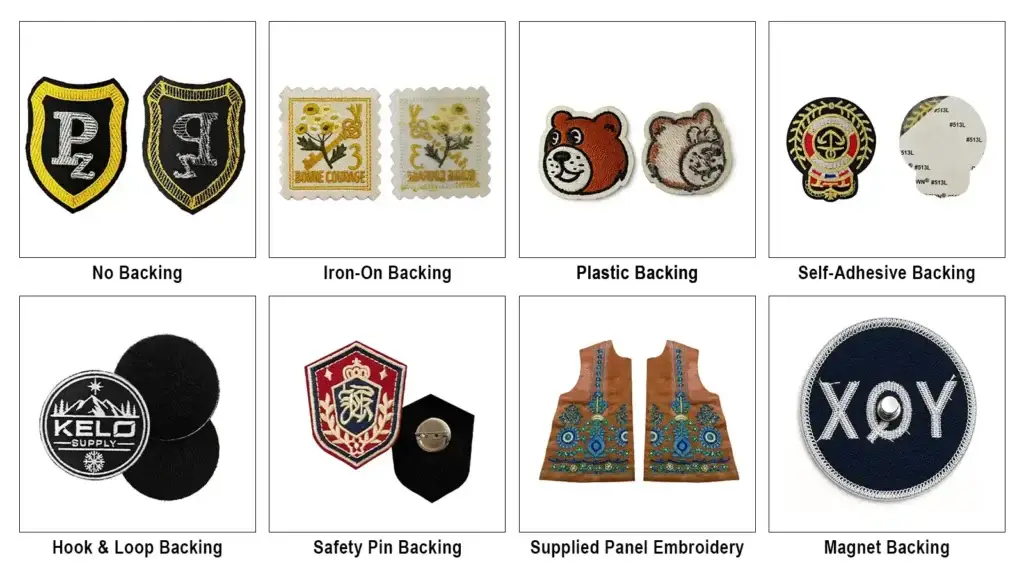
Common options include:
| Backing Type | Common Use |
| Sew-on | Strong and suitable for many garments, bags, and uniforms |
| Iron-on | Convenient for heat press or household iron application |
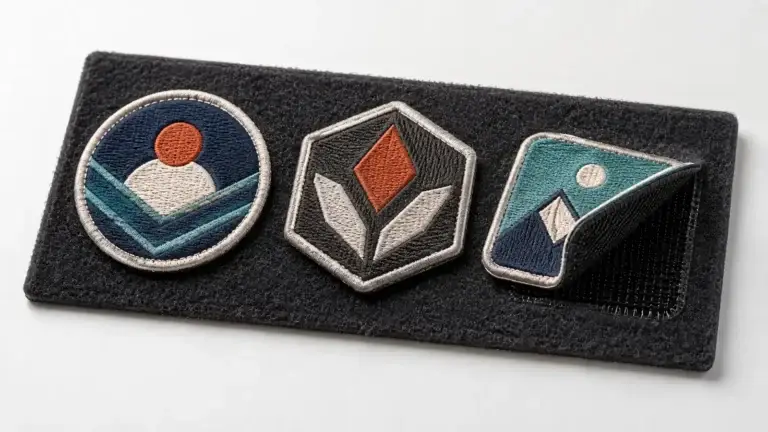
| Hook and loop / Velcro | Removable patches, tactical patches, uniforms, bags |
| Adhesive | Temporary positioning or short-term use |
| Plastic backing | Adds structure and shape stability |
| No backing | For patches that will be sewn directly or used in special production |
| Supplied panel embroidery | Embroidery directly on customer-supplied fabric or cut panels |
Not every backing is suitable for every situation.
For example, iron-on backing depends on heat, pressure, fabric type, and application method. Adhesive backing is usually not the best choice for long-term washing or heavy-use garments. Hook and loop backing is useful when the patch needs to be removed or changed.
If you are not sure which backing to choose, tell us how the product will be used. We can suggest a practical option based on the fabric, application area, and durability requirement.
7. Border or Edge Requirement
The edge of the patch affects both appearance and function.
Common edge options include:
| Edge Type | Best For |
| Merrowed border | Classic patch look, usually for simple shapes such as circles, ovals, squares, and rectangles |
| Satin stitch edge | Clean embroidered edge, suitable for many custom shapes |
| Laser-cut edge | Precise cutting for irregular shapes or appliqué-style designs |
| Raw edge | Usually used for appliqué or special garment production |
If your design has a simple shape, a merrowed border may be a good option. If the shape is more detailed or irregular, satin stitch or laser-cut edge may be more suitable.
The edge choice can affect the final look, thickness, flexibility, and how the patch sits on the product.
If you already have a reference sample, send us a photo. If not, we can help recommend an edge style based on the artwork and application.
8. Color Reference
Color is another important detail, especially for brand logos.
You can send:
- Pantone color numbers
- Thread color references
- A physical sample
- A previous batch sample
- A product photo
- Brand guideline file
Screen colors are useful for reference, but they are not always accurate as a production standard. The same color may look different on different screens, under different lighting, or on different materials.
For embroidery, thread color is also affected by thread texture and light reflection. If exact brand color is important, Pantone numbers or a physical sample are more reliable than a screen image alone.
If you do not have Pantone colors, that is okay. Send the clearest artwork you have, and the factory can match the closest available embroidery thread color for your approval.
9. Deadline and Delivery Expectation
Instead of only writing “urgent,” it is better to explain your real timeline.
Useful deadline information includes:
- When you need the sample
- When bulk production should be finished
- When the goods need to arrive
- Whether there is an event date
- Whether the patches are needed for garment assembly
- Whether the order is connected to a product launch or shipping schedule
For B2B buyers, embroidery is often only one part of the full production chain. A delay in embroidery may affect garment sewing, packaging, inspection, or final shipment.
A clear deadline helps the factory check whether the schedule is realistic before confirming the project.
For example:
“We need samples approved by March 10, and bulk patches delivered to our garment factory before March 25.”
This is much more useful than:
“Please make it fast.”
If your timeline is tight, send the details early. The factory can review whether sampling, material preparation, production, and shipping can fit your schedule.
10. Quality or Compliance Requirements
Some projects have special requirements beyond normal appearance.
Please tell the factory if you have requirements such as:
- Brand quality standard
- Material restriction
- Colorfastness requirement
- Washing requirement
- Packaging requirement
- Labeling requirement
- Factory audit requirement
- Testing document requirement
- Previous approved sample to match
- Sample-to-bulk consistency requirement
Not every project needs formal testing or special documentation. But if your company, brand, or customer has specific requirements, it is better to mention them before sampling.
This helps avoid problems later.
At YQX, we can review your requirements and cooperate with the information, samples, or documents needed for your project where applicable. For special testing or compliance requests, details should be confirmed based on the specific material, product use, and buyer requirements.
Quick RFQ Checklist
Before requesting a quote, you can prepare the following information.
| Item | What to Send | If You Are Not Sure |
| Artwork | AI, PDF, PSD, JPG, PNG, logo, sketch, or sample photo | Send the clearest image you have |
| Finished size | Width × height, diameter, or approximate size | Tell us the application area |
| Quantity | Sample quantity, first bulk order, possible repeat order | Send an estimated quantity range |
| Application area | Garment, cap, bag, sleeve, chest, label, panel, accessory part | Send a product photo |
| Base material | Cotton, denim, canvas, nylon, felt, twill, leather-like material | Describe the product or send a fabric photo |
| Backing | Sew-on, iron-on, hook and loop, adhesive, no backing | Tell us how the patch will be attached |
| Edge | Merrowed border, satin stitch edge, laser-cut edge, raw edge | Send a reference sample or ask for advice |
| Color reference | Pantone, thread color, physical sample, previous batch | Send clear artwork and we can review |
| Deadline | Sample date, bulk delivery date, event date | Tell us the real target date |
| Quality requirements | Testing, packaging, brand standard, compliance, sample matching | Share your buyer or brand requirements |
You do not need to prepare everything perfectly before contacting us. The goal is simply to give the factory enough information to review your project properly.
What YQX Can Review Before Sampling
Before making a sample, our team can help review the practical production details of your project.
This may include:
- Whether the artwork is suitable for embroidery
- Whether small text or fine details need adjustment
- Whether the size is practical for the design
- Which backing may be more suitable
- Which edge style may work better
- Whether the material may affect stitch stability
- Whether the sample result can be repeated in bulk production
- Whether there are possible risks before mass production
This early review is useful for B2B buyers because the sample is not just a display piece. It is the first step toward stable bulk production.
A good sample should help confirm the design, material, structure, backing, edge, color, and production direction before larger quantities are made.
A Simple Example of a Good Embroidery RFQ
Here is a simple example you can follow when sending an inquiry:
“Hello, we need custom embroidered patches for a jacket project.
Artwork is attached in PDF and PNG format.
Finished size: 80 mm wide × 50 mm high.
Quantity: 2 pcs for sample, then 500 pcs for first bulk order.
Application: left chest on cotton jacket.
Backing: sew-on, but we are open to your suggestion.
Edge: satin stitch edge.
Color: please follow the logo file; Pantone reference is attached.
Deadline: sample needed within 7 days if possible, bulk order needed before April 20.
Please review if the small text can be embroidered clearly.”
This kind of information helps the factory respond faster and more accurately.
Final Thoughts
A clear embroidery quote starts with clear project information.
You do not need to be an embroidery expert. You only need to share the basic details: artwork, size, quantity, material, application area, backing, edge, color reference, deadline, and any quality requirements.
If some details are still unclear, you can still send your inquiry. A good factory partner should help you review the design, explain the production options, and guide you toward a practical solution.
Send us your artwork, size, quantity, material, application area, and deadline. Our team can review your project for sampling and bulk production, and help you choose suitable embroidery details before production begins.