Choosing the right backing is an important part of making custom embroidered patches.
The backing affects how the patch is attached, how strong it is, whether it can be removed, and whether it is suitable for your final product.
Many buyers are not sure whether to choose sew-on, iron-on, Velcro, adhesive, or no backing. The best choice depends on how the patch will be used.
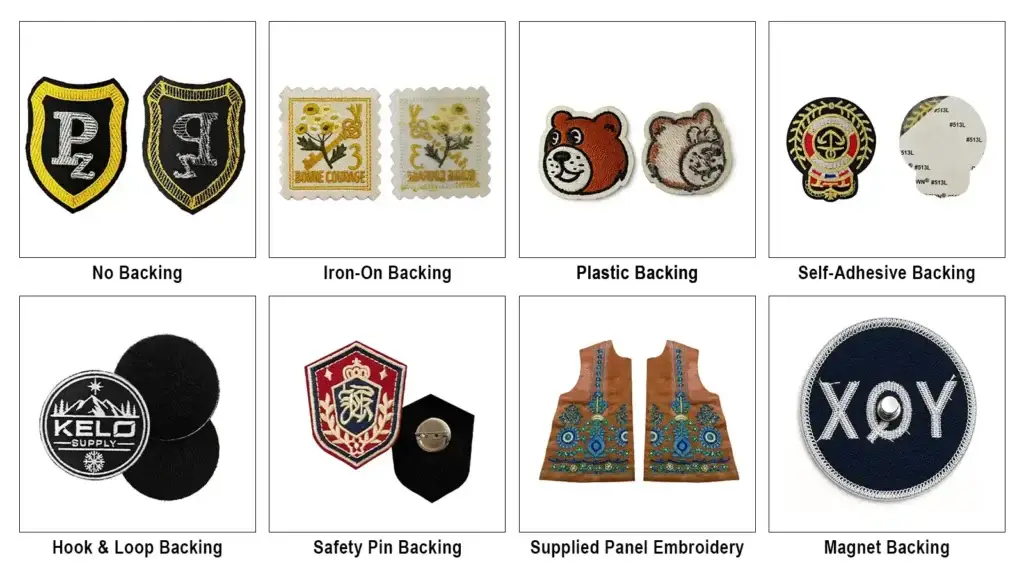
Why Patch Backing Matters
Patch backing is not just a small detail. It affects the final use of the patch.
A good backing choice can help the patch work better on garments, caps, bags, uniforms, accessories, or promotional products.
Before choosing backing, buyers should think about:
| Question | Why It Matters |
|---|---|
| Will the patch be sewn onto clothing? | Sew-on or no backing may be better |
| Does the fabric allow heat pressing? | Iron-on backing may be possible |
| Does the patch need to be removable? | Velcro backing may be better |
| Is it only for temporary use? | Adhesive or safety pin backing may work |
| Will the product be washed often? | Long-term fixing should be considered |
There is no single backing that fits every project. The best option depends on your product, material, and use.
Sew-On Backing
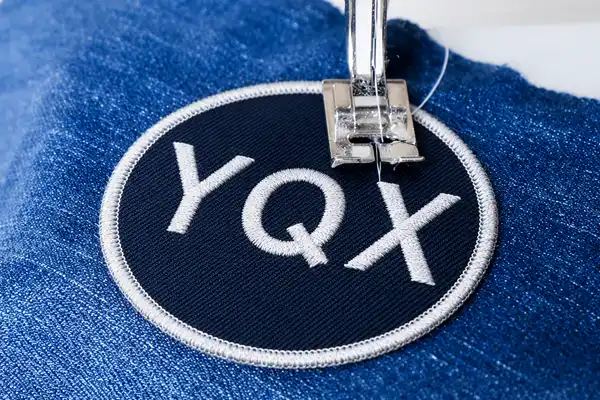
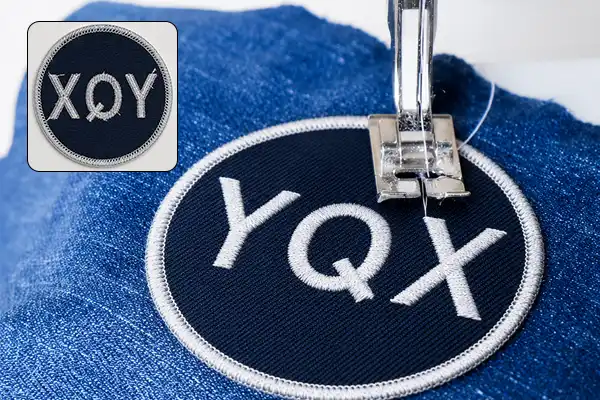
Sew-on backing is one of the most common choices for embroidered patches.
The patch is made without glue or adhesive on the back. It is attached by stitching it onto the final product.
Best For
- Garments
- Caps
- Bags
- Uniforms
- Workwear
- Long-term use
- Products that need washing
Buyer Note
Sew-on backing is a reliable option when the patch needs to stay firmly attached.
It is often suitable for B2B production because garment factories, cap factories, and bag factories can sew the patch during the final production process.
If durability is more important than quick application, sew-on backing is usually a safe choice.
Iron-On Backing
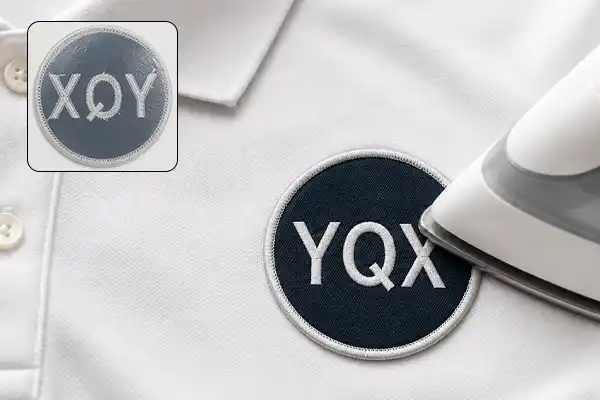
Iron-on backing has heat-activated glue on the back of the patch. The patch can be attached by heat press or ironing.
This option is convenient, but the fabric must be suitable for heat.
Best For
- Simple garment patches
- Promotional patches
- Heat press application
- Projects that need easier attachment
What Buyers Should Check
Before choosing iron-on backing, confirm:
- Can the fabric handle heat?
- Is the surface smooth enough for heat application?
- Will the product be washed often?
- Is extra sewing needed for stronger use?
Buyer Note
Iron-on backing is easy to use, but it is not suitable for every fabric.
Some materials may be damaged by heat. Some products may also need extra sewing if they require stronger long-term use.
For bulk orders, it is better to confirm the fabric and application method before sampling.
Velcro Backing
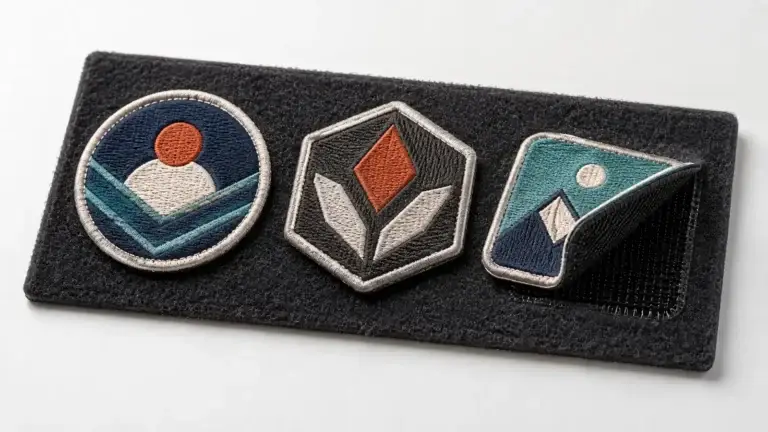
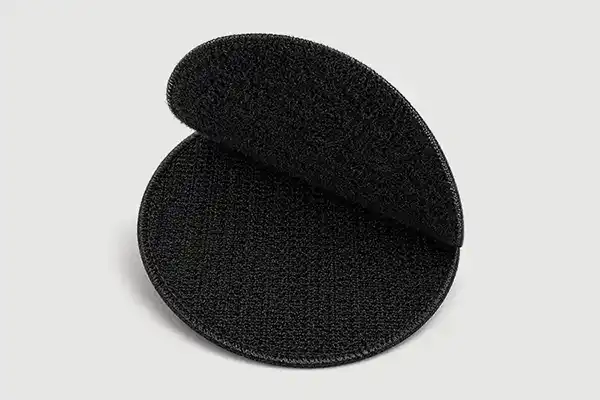
Velcro backing, also called hook and loop backing, allows the patch to be removed and replaced.
Usually, one side is added to the patch, and the matching side is attached to the garment, bag, cap, or uniform.
Best For
- Uniforms
- Tactical-style clothing
- Workwear
- Bags
- Caps
- Removable name patches
- Team or role identification patches
Buyer Note
Velcro backing is a good choice when the patch needs to be changed or removed.
It is useful for uniforms, workwear, outdoor products, and activity-related patches.
However, Velcro backing adds some thickness, so buyers should consider the final look and feel of the product.
Adhesive Backing
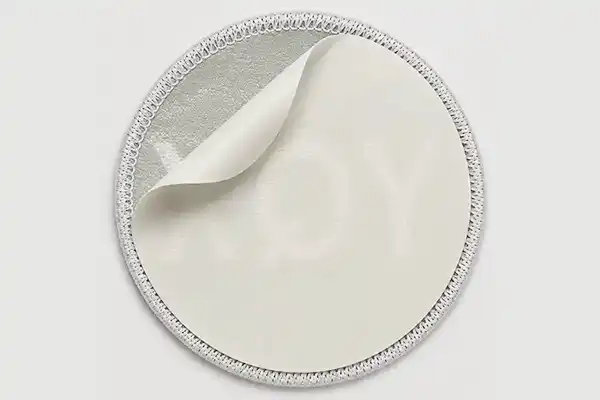
Adhesive backing has a peel-off sticker layer on the back of the patch.
It is easy to apply and does not require sewing or heat pressing. However, it is usually better for temporary use.
Best For
- Temporary use
- Events
- Product display
- Packaging decoration
- Short-term samples
- Position testing before sewing
Not Recommended For
- Long-term garment use
- Frequent washing
- Rough fabric
- Heavy outdoor use
Buyer Note
Adhesive backing is convenient, but it should not be used as a long-term fixing solution.
If the patch needs to stay on clothing, bags, or uniforms for daily use, sew-on or iron-on backing is usually more suitable.
No Backing
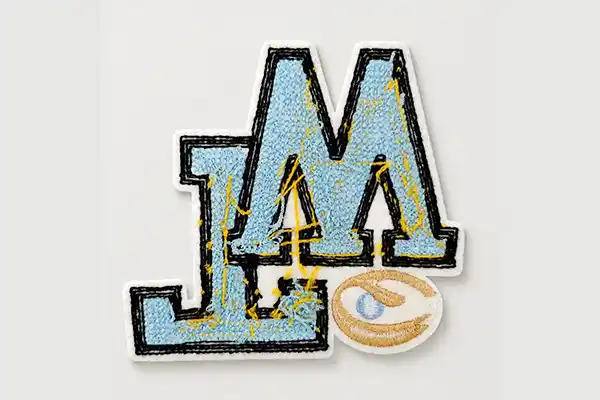
No backing means the patch does not have glue, adhesive, Velcro, or other extra backing.
This option is often used when the patch will be sewn later or used in another production process.
Best For
- Garment factories
- Bag factories
- Appliqué embroidery
- Supplied fabric panels
- Projects that need later sewing
- Special production requirements
Buyer Note
No backing is useful when the buyer or factory will handle the final sewing.
It is also suitable for appliqué embroidery and supplied panel embroidery, where the embroidered piece may become part of a larger garment or product.
When choosing no backing, it is helpful to explain how the piece will be used in the next production step.
Plastic Backing
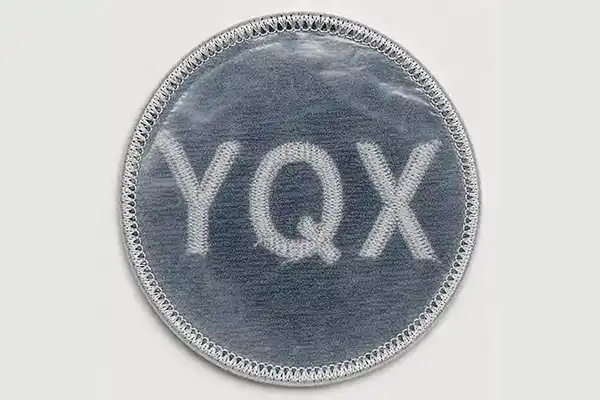
Plastic backing is added to the back of the patch to make it firmer and more structured.
It helps the patch keep its shape better.
Best For
- Patches that need more structure
- Flat display
- Patches that should hold shape better
- Designs where a firmer feel is preferred
Buyer Note
Plastic backing can make the patch look more stable and structured.
However, it may also make the patch feel less soft. If the patch needs to bend easily with soft fabric, plastic backing may not be the best option.
Safety Pin Backing
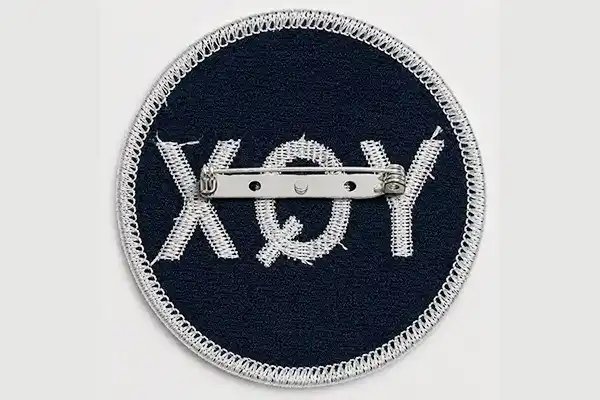
Safety pin backing allows the patch or badge to be attached and removed easily.
It is usually used for temporary wearing, events, or badge-style products.
Best For
- Events
- Badges
- Temporary wearing
- Promotional use
- Products that do not require permanent fixing
Buyer Note
Safety pin backing is easy to use, but it is not usually chosen for permanent garment production.
It is better for short-term or removable use.
Quick Backing Selection Guide
| Customer Need | Recommended Backing |
| Strong long-term attachment | Sew-on backing |
| Easy heat application | Iron-on backing |
| Removable patch | Velcro backing |
| Temporary use | Adhesive backing |
| Later sewing by garment factory | No backing |
| More structure and shape support | Plastic backing |
| Temporary badge-style use | Safety pin backing |
This table can help you choose a starting direction. The final choice should still depend on your product material and application method.
How to Choose Based on Application
| Application | Suggested Backing | Reason |
| Clothing | Sew-on or iron-on | Depends on fabric type, washing needs, and attachment method |
| Caps | Sew-on | More stable for curved surfaces |
| Bags | Sew-on or Velcro | Depends on whether the patch needs to be removable |
| Uniforms | Sew-on or Velcro | Suitable for long-term or replaceable use |
| Events | Adhesive or safety pin | Easy for temporary use |
| Garment panels | No backing | Suitable for later sewing or production |
If you are ordering patches for a specific product, it is helpful to send photos or details of the application area.
What Buyers Should Confirm Before Production
Before sampling or bulk production, buyers should confirm:
- Artwork or logo file
- Patch size
- Quantity
- Product material
- Application area
- Washing requirement
- Whether the patch should be permanent or removable
- Preferred backing
- Deadline
Clear information helps the factory suggest a more suitable backing and reduce misunderstanding before production.
Not Sure Which Backing Is Best?
If you are not sure which backing is suitable, you do not need to decide everything alone.
Send us your artwork, size, quantity, material, application area, backing requirement, and deadline. Our team can review your project details and suggest a suitable backing before sampling and bulk production.
This helps make the patch easier to apply, more suitable for your product, and closer to the final result you need.