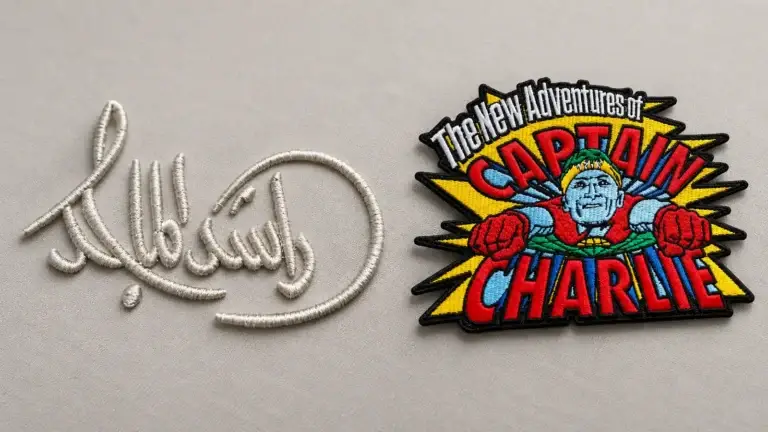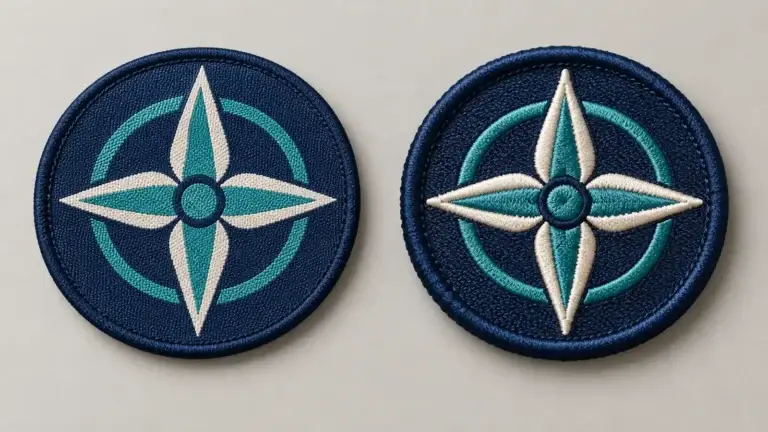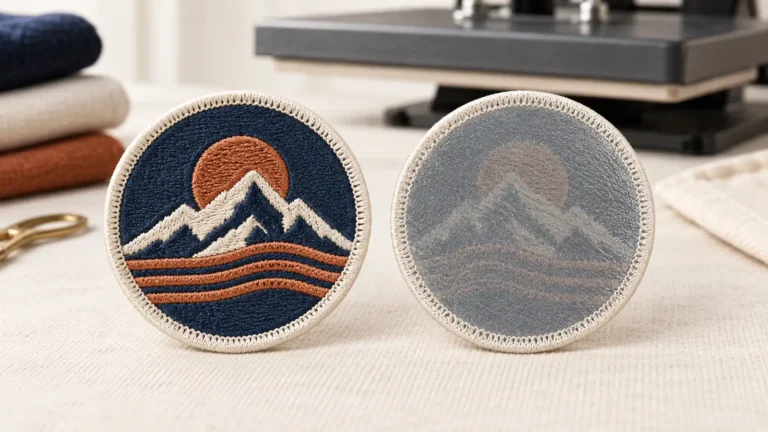
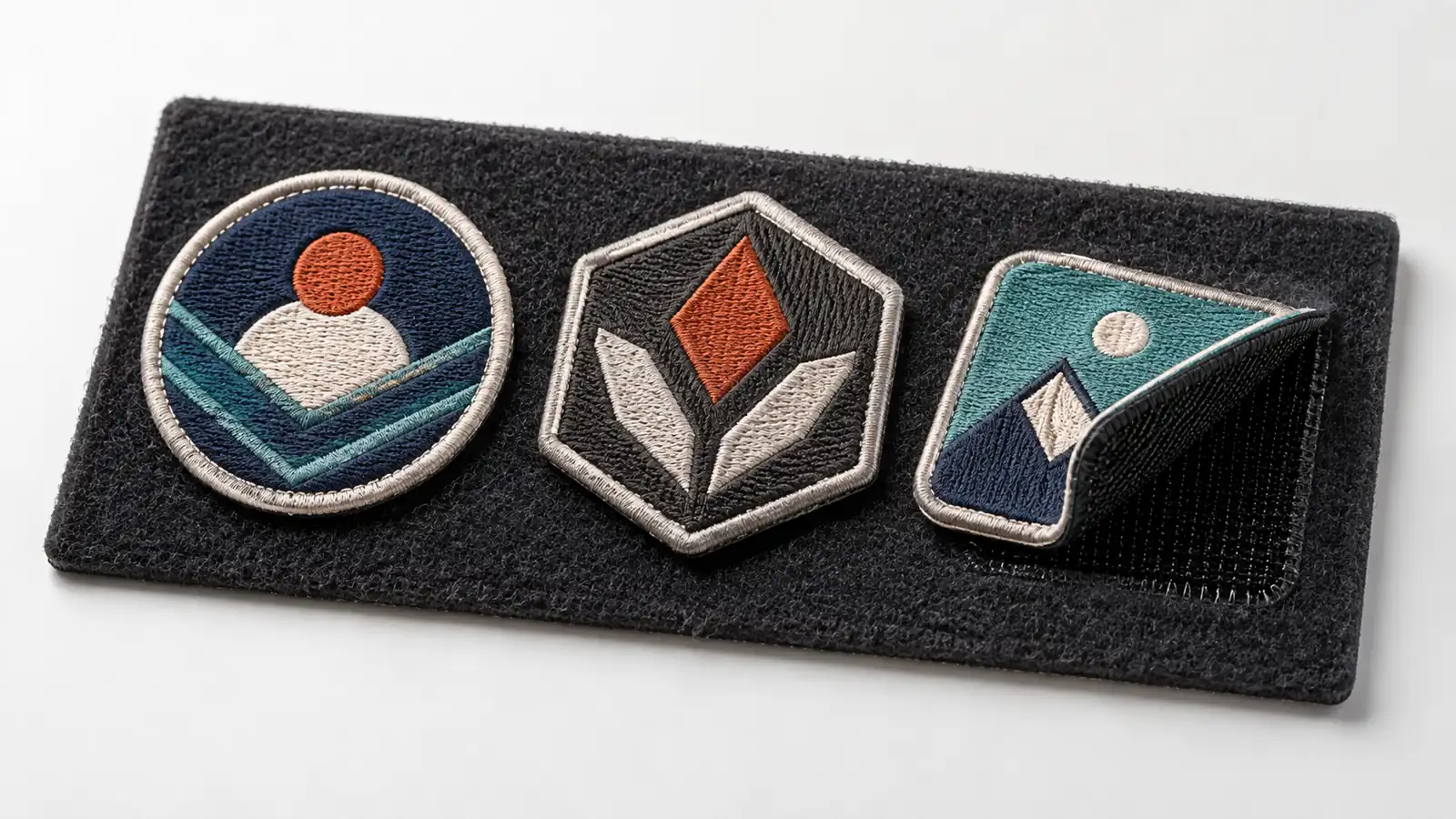
People searching for “velcro embroidered patches” usually mean embroidered fabric patches with hook-and-loop backing. The visible face is made with thread stitched onto a fabric base, while the reverse carries the hook side of a removable fastener. Press it onto a compatible loop panel on a jacket, cap, bag, vest, or other item, and you can remove or swap the patch without sewing or applying heat each time.
“VELCRO®” is a brand name, not the generic name for every fastener of this type. The VELCRO® Brand trademark guidelines reserve that name for genuine branded products. For other products, hook-and-loop embroidered patch is the accurate description.
How Does a Hook-and-Loop Embroidered Patch Work?
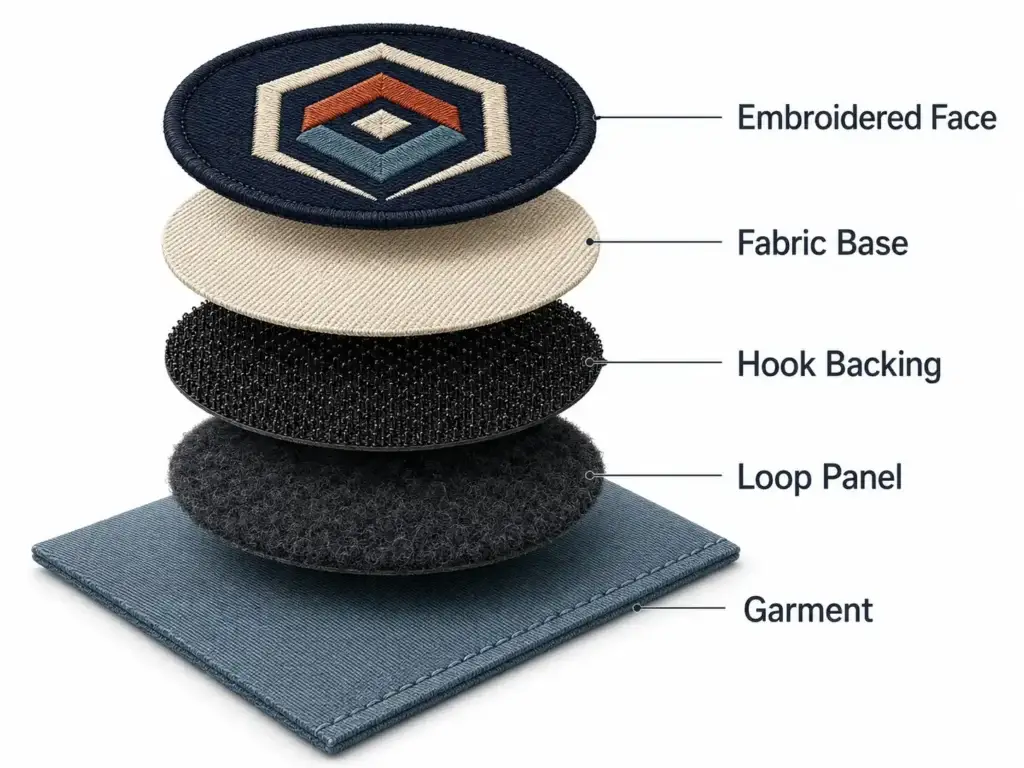
A typical patch system has two mating surfaces:
- Hook side: the rougher side, usually fixed to the back of the patch.
- Loop side: the softer side, fixed to or built into the garment or gear.
When pressed together, the small hooks catch the loops and hold the patch in place. Peeling from an edge separates them, allowing the same position to accept another compatible patch. The exact grip, thickness, and service life depend on the fastener materials, the contact area, how securely the backing is attached, and the conditions of use.
What Is the Patch Made Of?
Although suppliers use different materials and finishing methods, a hook-and-loop embroidered patch commonly includes:
- a fabric base that gives the patch its shape;
- decorative or identifying thread stitched across part or all of the face;
- a finished edge, such as a raised overlocked border for simple shapes or a heat-cut edge for more complex outlines; and
- hook material secured to the reverse.
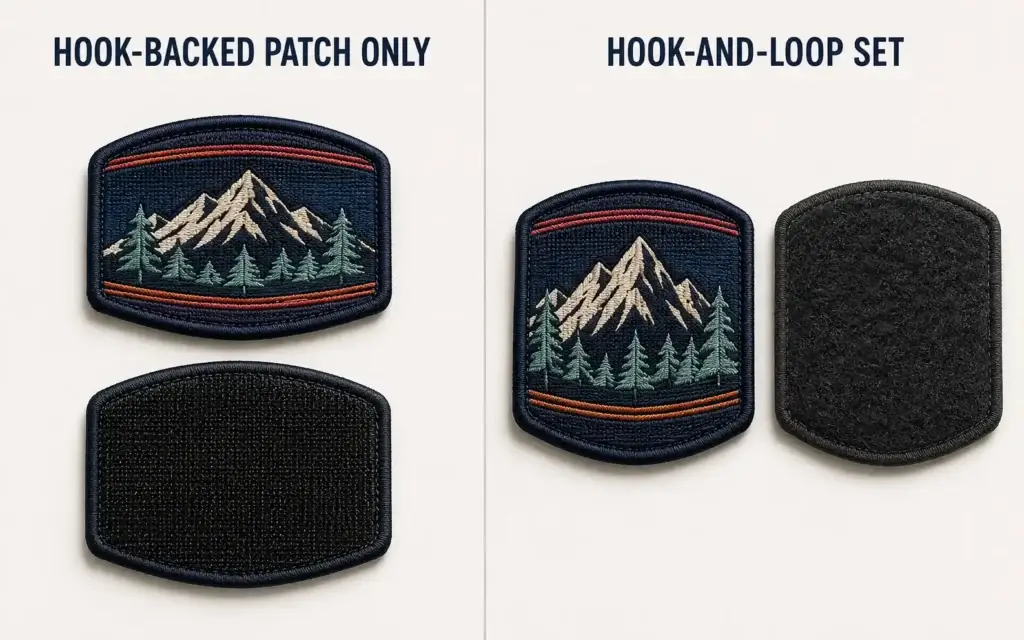
Some orders include only the hook-backed patch because the intended garment already has a loop field. Others include a matching loop piece that can be sewn onto a plain item. Confirm which configuration is included: “hook backing” does not always mean the supplier will also provide the loop side.
When Are Removable Embroidered Patches Useful?
Hook-and-loop backing makes sense when the patch needs to change while the base item stays in use. Common applications include:
- names, roles, departments, or shift identifiers on workwear;
- unit, team, club, or event patches;
- interchangeable branding on caps, bags, and display panels;
- identification on tactical or outdoor equipment; and
- limited-edition or collectible designs intended for patch panels.
The main advantage is flexibility. One garment can carry different names or identifiers, and a patch can be removed before a task or replaced when information changes. The trade-off is that the item needs a correctly sized loop panel. Exposed hook material can also collect lint or catch delicate textiles, so unused patches are best stored with a loop cover.
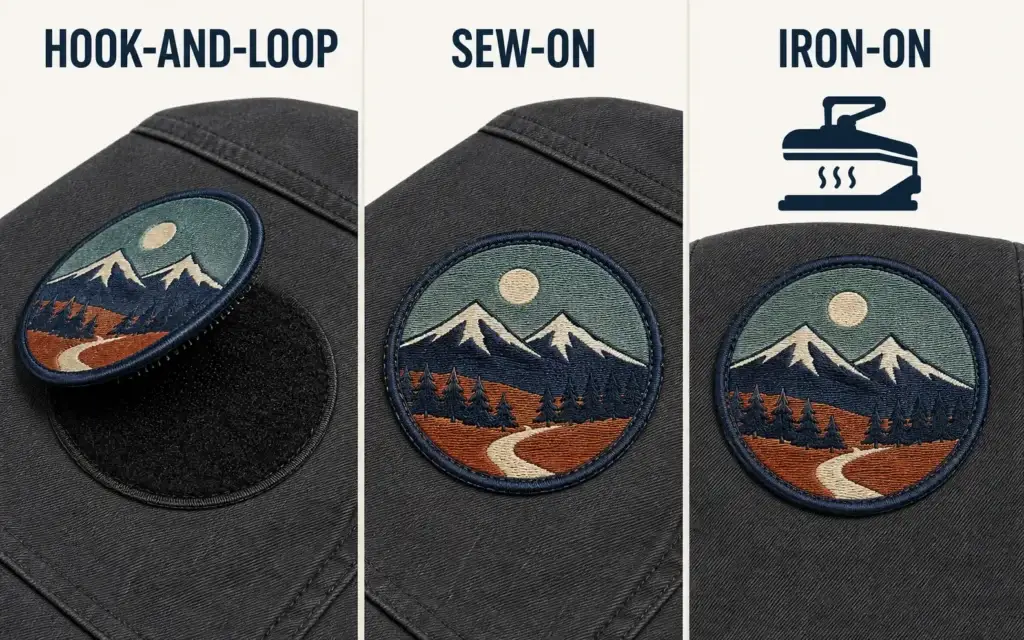
Hook-and-Loop vs. Sew-On vs. Iron-On Patches
The best backing depends less on appearance than on whether the patch should be removable.
| Backing | Best for | Main advantage | Main limitation |
|---|---|---|---|
| Hook-and-loop | Uniforms, gear, and items with interchangeable identifiers | Removable and reusable | Requires a compatible loop panel |
| Sew-on | Long-term placement on sewable fabric | Simple, permanent mechanical attachment | Removal or repositioning requires unpicking stitches |
| Iron-on | Quick placement on suitable, heat-tolerant fabric | No separate loop panel or routine sewing | Heat and adhesive compatibility vary by fabric and use |
Choose hook-and-loop when swapping is part of the job. Choose sew-on when the patch should remain in one place for the life of the item. Consider iron-on when fast installation matters and both the fabric and care routine are compatible with the adhesive system. For high-stress or frequently washed applications, ask the supplier for an attachment recommendation based on the actual garment rather than assuming one backing is universally strongest.
What Should You Specify Before Ordering?
A useful quote request should answer the following questions.
1. Where Will the Patch Be Used?
Name the item and show the attachment area. If it already has a loop field, measure the usable width and height rather than estimating from the garment size. Curved or narrow placements may limit the patch shape.
2. Do You Need the Hook Side Only or a Complete Set?
Order hook-backed patches only when every target item already has a compatible loop surface. If the items are plain, request matching loop pieces and state whether they will be sewn to fabric or attached to another surface.
3. What Are the Finished Size and Shape?
Provide dimensions for the finished patch, not just the artwork. Simple circles, rectangles, and shields often suit a traditional raised border. Intricate silhouettes may require a cut edge. Available methods and minimum detail sizes vary by supplier.
4. Is the Artwork Suitable for Embroidery?
Embroidery creates texture and a classic stitched appearance, but very small lettering, thin lines, gradients, and photographic detail may need simplification. Ask for a digitized proof at actual size. If tiny details are essential, compare embroidered patches with woven or printed alternatives before approving production.
5. What Conditions Must It Handle?
Tell the supplier about outdoor exposure, frequent laundering, abrasion, moisture, or required color matching. Request material and care recommendations for those conditions. Do not rely on a general “durable” claim when a specific performance requirement matters.
6. Who Owns the Artwork?
Confirm that you have permission to reproduce logos, insignia, names, or licensed characters. Official military and government marks may have separate authorization rules even when similar designs are easy to find online. For example, the U.S. Department of Defense publishes licensing guidance for its seals, logos, insignia, and service marks.
Care and Storage
Follow the patch supplier’s instructions together with the garment label. If the patch is removable, taking it off before laundering can reduce unnecessary contact with other textiles. For its branded fasteners, Velcro Companies advises fully engaging the two sides before washing, keeping exposed hooks covered, and using a firm brush to remove debris.
Quick Answers to Common Questions
Do these patches stick to any fabric?
No. They need a compatible loop surface. A plain jacket, cap, or bag will require a loop panel to be added first.
Which side is normally attached to the patch?
The hook side is normally on the patch, while the loop side is on the garment or gear. Confirm this when ordering because specialized systems can differ.
Are all hook-and-loop patches embroidered?
No. Hook-and-loop describes the attachment method, not the decorative face. A removable patch may be embroidered, woven, printed, or made from another material.
Is a hook-and-loop patch better than an iron-on patch?
It is better when removability matters. If the patch should stay permanently in one position, sew-on or a fabric-compatible heat-applied option may be simpler.
The Practical Takeaway
“Velcro embroidered patches” are best understood as removable embroidered patches with hook-and-loop backing. They are a strong choice for changing names, roles, units, branding, or designs—but only when the receiving item has a compatible loop area.
Before requesting a quote, prepare the artwork, finished dimensions, quantity, placement photo, color references, backing configuration, and intended use conditions. YQX offers hook backing, loop backing, and complete hook-and-loop sets for custom embroidered patches. Share those project details so the team can review the design and recommend a practical construction for sampling.